Spots in Your Feasts of Charity

Spots in Your Feasts of Charity, A Review of a Paper by Clifton Emahiser
Here I am going to take a break from our Isaiah commentary, which is nearing completion, to present a critique of a paper by Clifton Emahiser. Evidently, it’s been over five years since we had visited Clifton in this manner, when I reviewed The Day The Word Became Flesh in January of 2021, so it seems to be well past the time that we should hear from him again. So I conceived this presentation on Wednesday, as Clifton would have been 98 years old if he were still with us. But while we miss him, I am certain he is in a better place now.
Clifton never really dated his papers, except in the titles of the file names he stored on his computer, where he added dates which represented the various stage of completion, such as when they were drafted, when they were proofread and when they were finally ready to print. So this particular paper was ready for print on December 21st, 2014, and I posted it on his website two days later. Personally, I think dating papers is important, especially if we hope to write profusely over a long period of time, because over time we ourselves should learn, and our opinions in some matters should evolve, so it may be important to date our papers to show our own progression in learning. No man starts out with a knowledge of all things, and certainly no man can end with one either.
But there are many things which we can and should know, and that leads me to my second reason for wanting to present this paper here this evening. The theme of this paper is spots in your feast of charity, a clause found in the epistle of Jude, and the apostle certainly was not referring to wine or food dribbled on one’s clothing. This is relevant to certain trends I see among Christians in social media, and I will explain them this evening. Rather, the spots of which Jude had spoken were related to something we may read in Jeremiah chapter 2:
21 Yet I had planted thee a noble vine, wholly a right seed: how then art thou turned into the degenerate plant of a strange vine unto me? 22 For though thou wash thee with nitre, and take thee much soap, yet thine iniquity is marked before me, saith the Lord GOD.
As Clifton had once asserted in a different paper, commenting on this passage of Jeremiah:
In other words, one could buy forty gallons of strong lye soap and shower for forty days and forty nights, and one could not wash away the mark of an alien! Such a mark is a mark of uncleanness! Oh the money that is wasted on foreign missions!
The transgression of race mixing cannot be washed away, and therefore it cannot even be cleansed on the cross of Christ, as it says in the Law, in Deuteronomy chapter 23, that a bastard shall not enter the congregation of Yahweh. As Clifton had also justly taught in that paper, titled What Scripture Teaches About The “Unclean”, where Scripture demands that the children of Israel separate themselves from the unclean, it is referring to people, and not to literal vessels, in Isaiah chapter 52:
11 Depart ye, depart ye, go ye out from thence, touch no unclean thing; go ye out of the midst of her; be ye clean, that bear the vessels of the LORD.
As the King James Version has it, it adds the word thing to that text, which we would strike since it is in italics, which is an admission that it is not found in the Hebrew original. Yet even the Brown, Driver, Briggs Hebrew lexicon, in their definition of the Hebrew word טמא or tama (# 2931) or unclean, has “of aliens Isaiah 52:1 … perhaps also 35:8” [1] and this is the clear meaning in both of those verses, which they neglect to mention in relation to this verse. We would assert that Isaiah 52:1 sets the context for this verse at 52:11, and the unclean in both passages is a reference to people. That is also how Paul of Tarsus understood this passage where he had cited it in 2 Corinthians chapter 6 and said, in part:
17 Wherefore come out from among them, and be ye separate, saith the Lord, and touch not the unclean thing; and I will receive you, 18 And will be a Father unto you, and ye shall be my sons and daughters, saith the Lord Almighty.
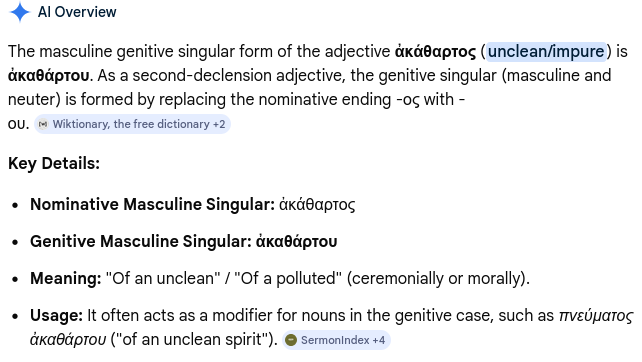
In that passage also, the King James Version added the word thing, which is not found in the Greek. The Greek word there for unclean, ἀκαθάρτου, which is a genitive form of ἀκάθαρτος, is either masculine or neuter, while Bible programs often only mention the neuter, which is deceptive. In Paul’s context, the unclean are the them in the clause “come out from among them”, referring to the ungodly with whom Christians should not have fellowship. The Scripture insists that Yahweh God will not receive Christians until they do “come out from among them” (i.e. Revelation 18:4).
In Exodus chapter 19 we read:
5 Now therefore, if ye will obey my voice indeed, and keep my covenant, then ye shall be a peculiar treasure unto me above all people: for all the earth is mine: 6 And ye shall be unto me a kingdom of priests, and an holy nation. These are the words which thou shalt speak unto the children of Israel.
In turn, Paul told the same Corinthians, in 1 Corinthians chapter 10, that:
1 Moreover, brethren, I would not that ye should be ignorant, how that all our fathers were under the cloud, and all passed through the sea; 2 And were all baptized unto Moses in the cloud and in the sea; 3 And did all eat the same spiritual meat; 4 And did all drink the same spiritual drink: for they drank of that spiritual Rock that followed them: and that Rock was Christ.
This is confusing to Christians who do not understand ancient history, however we have provided evidence, in a paper I wrote over 20 years ago titled Classical Records of the Dorian & Danaan Israelite-Greeks, that the Corinthians are Dorian Greeks, and the Dorians were a people who had come from the ancient Israelites at an early time. So Paul was writing to a group of those same people whom the Law in Exodus had said would be a peculiar people and a holy nation. The Hebrew word for holy in that phrase is קדושׁ or qadosh (# 6918), which is holy or sacred because the word means separate or set apart. A nation designated in such a manner is separate from all other nations.
Thus we read in 1 Kings chapter 8:
53 For thou didst separate them from among all the people of the earth, to be thine inheritance, as thou spakest by the hand of Moses thy servant, when thou broughtest our fathers out of Egypt, O Lord GOD.
Therefore, a little further on in that same chapter of 1 Corinthians, Paul had told his readers:
8 Neither let us commit fornication, as some of them committed, and fell in one day three and twenty thousand.
There Paul was referring to a race-mixing event where in Numbers chapter 25 we read:
1 And Israel abode in Shittim, and the people began to commit whoredom with the daughters of Moab.
The law in Deuteronomy chapter 23 states that:
3 An Ammonite or Moabite shall not enter into the congregation of the LORD; even to their tenth generation shall they not enter into the congregation of the LORD for ever.
The phrase “to their tenth generation” is really a metaphor for forever, because after ten generations a Moabite is still a Moabite, and a bastard is still a bastard.
Therefore to Paul, fornication included the sin of race-mixing, or miscegenation, and while Clifton does not discuss it here, in Jude 7 the apostle made a reference to the sins of Sodom and said that they had been “giving themselves over to fornication, and going after strange flesh”, which in Greek is different flesh. The Greek word is ἕτερος or heteros, which is literally different.
Some contenders claim that Jude was referring to the flesh of the angels who visited Lot, but that is not true. Those angels had appeared to be men, they were treated as men by Abraham, who fed and lodged them and never knew that they were angels, and they were treated as men by Lot. Rather, according to Jude, the Sodomites had been doing much more than committing Sodomy, as they must have also been race-mixing. That is clearly the context, as in verse 6 Jude referred to “the angels which kept not their first estate”, which is a reference to the fallen angels of Genesis chapters 3 and 6.
The apostle Peter substantiates the words of Paul in 2 Corinthians chapter 6, where he had addressed his first epistle “to the elect sojourners of the dispersion”, if we translate the opening verse ourselves, choosing the literal meanings of the Greek words rather than the nescient simplifications of the King James Version, and then, further on in chapter 2 of the epistle he wrote:
9 But you are an elect race, a royal priesthood, a holy nation, a peculiar people, so that you should proclaim the virtues for which from out of darkness you have been called into the wonder of His light, 10 who at one time were “not a people” but now are the people of Yahweh, those who “have not been shown mercy” but are now shown mercy.
The Greek word for holy in that passage is ἅγιος (# 40), which Liddell & Scott define primarily as something devoted to the gods, from a pagan Greek perspective, but for a Christian, devoted to God. Something devoted to a god in the ancient world is something that was pledged on an altar and committed to the temple of that God. Peter’s words had invoked Exodus chapter 19, as he knew he was speaking to people of the dispersion of Israel, and therefore also made the reference to the prophecy concerning Israel which is found in Hosea chapters 1 and 2. In Scripture, only the children of Israel had ever been devoted to Yahweh according to His Word, and the words of men are vanity if they are to the contrary.
Being a holy nation, properly, Christians are those scattered Israelites of the twelve tribes for whom Paul had professed of having labored, in Acts chapter 26, and whom James had also addressed in his only surviving epistle, which was written “to the twelve tribes which are scattered abroad”. Maintaining their holiness, they must separate themselves from all other peoples, and according to both Isaiah and Paul, on that condition Yahweh their God shall receive them as sons and daughters. There is no other way to do this, but the Way which was provided by Yahweh God Himself.
So for my part, I am mystified, as to how or why Identity Christians should tolerate the presence in their spaces of a character such as Jon Minadeo, who is the actor who plays the role of the so-called “Handsome Truth”. Minadeo is said in mainstream internet sources to be a Mexican, he has clearly been exposed many times as a Sodomite, and there is evidence that his own aunt admitted that the family had Jewish roots. He is certainly not White, regardless of his own deceptive claims, and he is an unrepentant sinner, so far as a bastard could sin.
It also startles me that Identity Christians would tolerate a clown such as Paul Miller, who goes by the moniker “Gypsy Crusader”, and who has admitted being of mixed Gypsy and Turkic and background, among other things. But for us, the dead giveaway is not only his generally swarthy, non-White appearance, but the Super Mario eyebrows so pronounced that they may even make Groucho Marx envious.
But what is even worse than these, is the seemingly White character named Dustin Krieger, whose online moniker is “Dustin Nemos”. This Nemos character is a former dancer in “gay” bars and a Qanon grifter who suddenly embraced Christian Identity once his Qanon grift went into decline. So he plagiarized as much material as he could, and adapted it to fit his own personal situation, which is that of a race-mixer, as he proclaims for himself to be a sage. With this chutzpah he aims to impress souls searching for truth, and allure them into his own trap.
The trap is an acceptance of miscegenation. This Dustin Nemos character has a Filipina wife and has had several children with her, over whom he dotes as a loving father, and he has even posted photos of them and shown them in his videos. So he celebrates his race-mixing, while he slanders all those who oppose him for it as “jews”. For Dustin the only viable solution is repentance, but he refuses to acknowledge his actions as sin. Of such a man, whose sin was a different sort of fornication which nevertheless applies here, the apostle Paul had written in 1 Corinthians chapter 5 advising them:
5 To deliver such an one unto Satan for the destruction of the flesh, that the spirit may be saved in the day of the Lord Jesus.
Then a little further on in that chapter, where he also referred to a previous but now missing epistle to the Corinthians:
9 I wrote unto you in an epistle not to company with fornicators: 10 Yet not altogether with the fornicators of this world, or with the covetous, or extortioners, or with idolaters; for then must ye needs go out of the world. 11 But now I have written unto you not to keep company, if any man that is called a brother be a fornicator, or covetous, or an idolater, or a railer, or a drunkard, or an extortioner; with such an one no not to eat. 12 For what have I to do to judge them also that are without? do not ye judge them that are within? 13 But them that are without God judgeth. Therefore put away from among yourselves that wicked person.
Christians are to put out from among themselves men who are unrepentant sinners. In this case, if Dustin Nemos were to repent, he must follow the example of the interpretation of the law found in Ezra chapter 10 where certain fornicators of Ezra’s own time had repented and we read:
2 And Shechaniah the son of Jehiel, one of the sons of Elam, answered and said unto Ezra, We have trespassed against our God, and have taken strange wives of the people of the land: yet now there is hope in Israel concerning this thing. 3 Now therefore let us make a covenant with our God to put away all the wives, and such as are born of them, according to the counsel of my lord, and of those that tremble at the commandment of our God; and let it be done according to the law.
If a Christian accepts a sinner, or the fruits of a sinner, then he is just as liable for the sin as the sinner himself. If a Christian accepts a bastard, then he is approving of the act pf fornication which created the bastard. This applies not only to Jon Minadeo, Paul Miller and Dustin Nemos, but also to other internet personalities who are propped up as “opposition” by the enemies of Christ, including Dan Bilzerian, Nick Fuentes, Candace Owens, and a host of other clowns and demons. Simply because each of these individuals sometimes say things that we might like to hear, does not mean that we should follow or promote them. In truth, we should not even acknowledge their existence. Paul had written in the closing verse of Romans chapter 1, and spoke of certain sinners:
32 Who knowing the judgment of God, that they which commit such things are worthy of death, not only do the same, but have pleasure in them that do them.
Our own translation of the same verse reads:
32 such as these who knowing the judgments of Yahweh, that they practicing such things are worthy of death, not only they who cause them, but also they approving of those committing them.
When we approve of sinners, according to Scripture we are worthy of the same penalty to which the sinners are liable. Approval of a sinner signals approval of sin to the wider community, and for that Paul wrote in reference to the fornicator in 1 Corinthians chapter 5: “Know ye not that a little leaven leaveneth the whole lump?” If we are serious about our Christian faith, then we cannot accept sinners, and we cannot accept spots in our feasts of charity, which have come into the world by the hand of sinners.
So with that, we shall present and discuss Clifton’s paper:
“... Spots in Your Feasts of Charity ...” – Jude 12
In order to get the context of Jude 12, we really should read vv. 9 through 12 thusly:
“9 Yet Michael the archangel, when contending with the devil he disputed about the body of Moses, durst not bring against him a railing accusation, but said, Yahweh rebuke thee. 10 But these speak evil of those things which they know not: but what they know naturally, as brute beasts, in those things they corrupt themselves. 11 Woe unto them! for they have gone in the way of Cain, and ran greedily after the error of Balaam for reward, and perished in the gainsaying of Core. 12 These are spots in your feasts of charity, when they feast with you, feeding themselves without fear: clouds they are without water, carried about of winds; trees whose fruit withereth, without fruit, twice dead, plucked up by the roots ....”
Now here I shall pause Clifton to explain that the error of Balaam was evidently his counsel to Balak, where we learn in Micah chapter 6 that it was he who had the king of Moab tempt the children of Israel into fornication. The way of Cain was that of the Nephilim, and killing his brother Abel he lied, hoping to hide his crime, and exhibiting the fact that he was indeed a bastard, as the apostle John also explained in chapter 3 of his first epistle, that Cain was the son of the Wicked One. The gainsaying of Core, or Korah, was a defiant establishment of his own priesthood, contrary to what Yahweh God had established in the ordained priesthood of the descendants of his cousin, Aaron’s elder son Eleazar. To establish his own priesthood, a man must also imagine that he may establish his own law, which in itself is an act of rebellion against God. That is also the attitude of some of the sinners we have mentioned here this evening.
Continuing with Clifton:
To get a good start on this subject, I will quote from the KJV at John 5:15-16, 18, but I will amplify it so the reader will better understand the complete context thereof:
“15 The man departed, and told the Edomite-jews that it was Yahshua, which had made him whole. 16 And therefore did the Edomite-jews persecute Yahshua, and sought to slay him, because he had done these things on the sabbath day ... 18 Therefore the Edomite-jews sought the more to kill him, because he not only had broken the sabbath, but said also that Yahweh was his Father, making himself equal with Yahweh.”
Now I must add a caveat: I would not make this distinction, as there is no way of knowing that it is absolutely and completely true, and it is simply not fair to guess. In John chapter 12 we read:
42 Nevertheless among the chief rulers also many believed on him; but because of the Pharisees they did not confess him, lest they should be put out of the synagogue: 43 For they loved the praise of men more than the praise of God.
While the high priests, who throughout the first century were almost exclusively of the party of the Sadducees, were almost certainly Edomites, having been appointed by the Herods, many of the other prominent men among the Judaeans were not Edomites. However as John informs us, they went along with the Edomites in their rejection of Christ even if they themselves believed Christ, because they loved the world rather than loving God. They were basically playing the whore for the devils. So while Clifton is correct, that Christ must have been addressing particular Edomites later in John chapter 5, I would not go so far as to insist that all of those who were present must have been Edomites.
Thus we continue:
Then at John 5:42, Yahshua replied to the Edomite-jews in no uncertain words: “But I know you, that ye have not the love of Yahweh in you.”
Next Clifton will provide a long citation of John chapter 10, and the conclusion he begins with is absolutely correct, in spite of the fact that there are many deceivers today. So he continues:
Further, at John 10:1-15, 19-30, Yahshua separates the believing Israelite sheep from the unbelieving Edomite-jewish tares, as translated by William Finck in his Christogenea New Testament:
“‘1 Truly, truly I say to you, he not entering through the door into the pen of the sheep, but going up from another place, that man is a thief and a robber. 2 But he entering through the door is the shepherd of the sheep. 3 For him the doorman opens and the sheep hear his voice and he calls his own sheep by name and he leads them out. 4 When all of his own go out, he goes before them and the sheep follow him, because they know his voice. 5 Yet they shall not follow another, but flee from him, because they do not know the voice of strangers.’ 6 Yahshua spoke this parable to them, but they did not know what these things were which He spoke to them.
According to these words of Christ, we must accept the fact that His sheep did indeed hear His voice, and that by the fall of Jerusalem, those who had not heard His voice were almost certainly not His sheep. They should never be accounted as His sheep, which is more evident in the later portions of this chapter, which Clifton also cites here. Continuing with the citations of John chapter 10:
“7 Therefore Yahshua spoke again: ‘Truly, truly I say to you that I am the door of the sheep! 8 All as many as have come before Me are thieves and robbers, but the sheep did not hear them. 9 I am the door! If one should enter by Me he shall be preserved and shall enter in and shall go out and he shall find pasture. 10 The thief does not come except that he may steal and slaughter and destroy. I have come in order that they would have life and they would have abundance! 11 I am the Good Shepherd. The Good Shepherd lays down His life on behalf of the sheep! 12 The hired hand, who also not being the shepherd, of whom the sheep are not his own, watches the wolf coming and leaves the sheep and flees, and the wolf seizes and scatters them, 13 because he is a hired hand and there is no care in him concerning the sheep!
Most modern priests and pastors are either wolves, or hired hands. However Christ also informs us how to tell them apart even if they do profess Him, but for now, continuing with Clifton:
“‘14 I am the Good Shepherd and I know Mine and Mine know Me, 15 just as the Father knows Me and I know the Father, and I lay down My life on behalf of the sheep.’ ....
Now Clifton skips ahead to verse 19:
“19 There was division again among the Judaeans on account of these words. 20 Then many from among them said ‘He is mad and has a demon! Why do you listen to Him?’ 21 Others said ‘These are not the words of one possessed by a demon! Is a demon able to open the eyes of the blind?’
It is not by chance, that in John chapter 8 Christ had explained how His adversaries were children of the devil, even if they claimed to be children of Abraham, and then in John chapter 9 Christ had opened the eyes of a blind man, a man who was blind from birth, while here in John chapter 10 he informs them once again that they are not His sheep, and He explains how. If Christians would only believe His words in John chapters 8 and 10, they would also be healed of their blindness. Continuing with Clifton’s citation:
22 Then there was the feast of dedication in Jerusalem – it was winter –23 and Yahshua walked about in the temple on the porch of Solomon. 24 Then the Judaeans surrounded Him and said to Him: ‘How long do You keep us in suspense? If You are the Christ, speak to us openly!’ 25 Yahshua replied to them: ‘I have spoken to you and you do not believe! The works which I do in the name of My Father, these things testify concerning Me. 26 But you do not believe, because you are not My sheep! 27 My sheep hear My voice, and I know them and they follow Me, 28 and I give to them eternal life and they are not lost forever and one shall not snatch them from My hand. 29 My Father who gave them to Me is greater than all, and no one is able to snatch them from the hand of the Father! 30 I and the Father are One!’”
This ends Clifton’s citation of John chapter 10. Notice two things. First, Christ said that His sheep know and follow Him. To follow Him is to obey Him, and in John chapters 14 and 15, He repeated the admonition to His disciples that “If you love me, keep my commandments”, in several different ways. The apostle John interpreted His words in his first epistle, and in chapter 2 he wrote, in part:
3 And hereby we do know that we know him, if we keep his commandments. 4 He that saith, I know him, and keepeth not his commandments, is a liar, and the truth is not in him.
Then in chapter 3, John upheld the law, referring to the law of Moses:
3 And every man that hath this hope in him purifieth himself, even as he is pure. 4 Whosoever committeth sin transgresseth also the law: for sin is the transgression of the law.
Then a little later:
8 He that committeth sin is of the devil; for the devil sinneth from the beginning. For this purpose the Son of God was manifested, that he might destroy the works of the devil. 9 Whosoever is born of God doth not commit sin; for his seed remaineth in him: and he cannot sin, because he is born of God. 10 In this the children of God are manifest, and the children of the devil: whosoever doeth not righteousness is not of God, neither he that loveth not his brother.
So Christians should show their love for both God and their brethren by keeping the law. Refusing to do righteously according to the law, one is demonstrating that he is not of God. Then at the end of the chapter, we read:
22 And whatsoever we ask, we receive of him, because we keep his commandments, and do those things that are pleasing in his sight. 23 And this is his commandment, That we should believe on the name of his Son Jesus Christ, and love one another, as he gave us commandment. 24 And he that keepeth his commandments dwelleth in him, and he in him. And hereby we know that he abideth in us, by the Spirit which he hath given us.
This is a paraphrase of things which John had learned from Christ in the Gospel, for example in John chapter 15:
10 If ye keep my commandments, ye shall abide in my love; even as I have kept my Father's commandments, and abide in his love.
Or more fully, earlier, in John chapter 14:
21 He that hath my commandments, and keepeth them, he it is that loveth me: and he that loveth me shall be loved of my Father, and I will love him, and will manifest myself to him. 22 Judas saith unto him, not Iscariot, Lord, how is it that thou wilt manifest thyself unto us, and not unto the world? 23 Jesus answered and said unto him, If a man love me, he will keep my words: and my Father will love him, and we will come unto him, and make our abode with him. 24 He that loveth me not keepeth not my sayings: and the word which ye hear is not mine, but the Father's which sent me.
So if the commandments prohibit miscegenation, or race-mixing, how can Christians accept such fornicators as Dustin Nemos, and imagine that they are pleasing Christ? Or just as bad, bastards such as Jon Minadeo or the Gypsy Crusader character? How are they not spots in our feasts of charity? Here we do not want to get ahead of Clifton, who responds to the citation from John chapter 10:
I should make it quite clear here that there are three genetic kinds of two-legged, biped beings walking about our planet in shoe-leather that should not be confused with each other (sheep-people, goat-people and tare-people).
In Clifton’s eyes, the tare-people were the descendants of Cain, while the goat-people are the non-Adamic nations which are not descended from Cain. This is not wrong, however I would lump tares and goats together, because they all ostensibly came from the Nephilim, whose leader was the serpent of the garden, and the destiny of all of them is the “fire prepared for the devil and his angels”, as we are informed in Matthew chapter 25.
Now Clifton continues:
Adam was the first sheep, and was “created”, “formed” and “made” by Almighty Yahweh, and the others were not. For Adam (i.e., man), we have evidence at Isaiah 43:3-7:
3 For I am Yahweh thy Elohim, the Holy One of Israel, thy Saviour: I gave Egypt for thy ransom, Ethiopia and Seba for thee. 4 Since thou wast precious in my sight, thou hast been honourable, and I have loved thee: therefore will I give men for thee, and people for thy life. 5 Fear not: for I am with thee: I will bring thy seed from the east, and gather thee from the west; 6 I will say to the north, Give up; and to the south, Keep not back: bring my sons from far, and my daughters from the ends of the earth; 7 Even every one that is called by my name: for I have created 1254 him for my glory, I have formed 3335 him; yea, I have made 6213 him.” And this passage is not referring to the Edomites, known to us since 130 B.C., as jews! (Josephus’ Antiquities 13:9:1).
There Clifton referenced Josephus, and the first passage in his Antiquities which describes how Edomites became Judaeans, although there are several which are subsequent to that one. In the text of that last paragraph, Clifton had inserted some Strong’s numbers after the words for created, formed and made, which we shall otherwise ignore. But in the course of our combined ministries, there have been men who had contended with us over the significance of those words as they appear in Genesis. So Clifton sought to point out that the manner in which Isaiah had used them in that passage helps serve to prove our position on them to be correct where they appear in Genesis chapters 1 and 2. Now he continues:
Secondly, we have biped beings as weed-people (i.e., “tares”) at Matt. 13:24-30; 36-42:
“24 Another parable put he forth unto them, saying, The kingdom of heaven is likened unto a man which sowed good seed in his field: 25 But while men slept, his enemy came and sowed tare-people among the wheat-people, and went his way. 26 But when the blade was sprung up, and brought forth fruit, then appeared the tare-people also. 27 So the servants of the householder came and said unto him, Sir, didst not thou sow good seed in thy field? from whence then hath it tares? 28 He said unto them, An enemy hath done this. The servants said unto him, Wilt thou then that we go and gather them up? 29 But he said, Nay; lest while ye gather up the tare-people, ye root up also the wheat-people with them. 30 Let both grow together until the harvest: and in the time of harvest I will say to the reapers, Gather ye together first the tare-people, and bind them in bundles to burn them: but gather the wheat-people into my barn. .…
That was the parable of the wheat and the tares. Now we must bear in mind, that what follows is an explanation of the parable, which was requested by the disciples. So the words must be interpreted with more literal meanings, since we cannot imagine that Christ was honoring the request to explain the parable with another parable. Therefore we shall continue with the citation from Matthew chapter 13:
36 Then Yahshua sent the multitude away, and went into the house: and his disciples came unto him, saying, Declare unto us the parable of the tares of the field. 37 He answered and said unto them, He that soweth the good seed-people is the Son of man; 38 The field is the world; the good seed-people are the children of the kingdom; but the tare-people are the children of the wicked one; 39 The enemy that sowed them is the devil; the harvest is the end of the world; and the reapers are the angels. 40 As therefore the tare-people are gathered and burned in the fire; so shall it be in the end of this world. 41 The Son of man shall send forth his angels, and they shall gather out of his kingdom all things that offend, and them which do iniquity; 42 And shall cast them into a furnace of fire: there shall be wailing and gnashing of teeth.”
With this it must be recognized that there are people in this world which are not from of God. Just as Christ had told His adversaries, in John chapter 8, “Ye are from beneath; I am from above: ye are of this world; I am not of this world”, and He had also said to Nicodemus, in John chapter 3, after we translate the passage for ourselves, “Except a man be born from above, he cannot see the kingdom of God.” Then, in Matthew chapter 15, this is apparent once again where Christ had stated “Every plant, which my heavenly Father hath not planted, shall be rooted up.”
The only man created by God is Adam, and his descendants are listed in the table of nations found in Genesis chapter 10. In that chapter, all of the nations which may be identified in archaeology and history are White nations, and there are no east Asians, Dravidians, sub-Saharan Africans or South American Indians, nor anyone of any other non-Adamic race. So there are no Filipinas, and Dustin Nemos should follow the instructions found in Ezra chapter 10, however it seems that he is not of God, according to John in his first epistle, because he refuses the commandments of God. There are also no Gypsies or gay Mexicans, so Paul Miller and Jon Minadeo are only spots in our feasts of charity, even if those feasts are only internet spaces. They and others like them must all be rejected and spurned by Christians. They should even be mocked and ridiculed for posing pretenders, and LARPing as so-called White Nationalists, like a wolf can enter a flock and pretend to be an advocate for the sheep, while filling his belly with them at the same time.
Now once again continuing with Clifton:
I would advise all serious Bible students that the genetic weed-people, or, (i.e., “tares”) are not the White Caucasian-Adamic-people, nor are the genetic White-Adamic-Caucasian people to be confused with the swarthy complexioned weed-people, or, i.e., “tares”! The “tares” are derived from Esau’s Hittite and Hivite [Horite] wives, who in turn descended from the line of Cain (i.e., Kenites 7017 of Gen. 15:19 & 1 Chron. 2:55). We have to be careful, though, with the name “Kenite”, as at Gen. 15:19, it is described as a genetic tribe of people.
Now while that much is correct, I will disagree with Clifton in what follows:
Yet, when Moses fled Egypt, he settled with a Midianite family descended from Abraham and Keturah (whom Abraham married after Sarah’s death). So, evidently, the term “Kenite” at Judges 1:16 refers to a geographic area where the descendants of Cain once occupied, and maybe still occupied in part. And it may have been “Kenite” shepherds who tried to interfere with Reuel’s seven daughters when they tried to draw water for their father’s flock, of whom Moses made quick work, Exo. 2:15-21:
“15 Now when Pharaoh heard this thing, he sought to slay Moses. But Moses fled from the face of Pharaoh, and dwelt in the land of Midian: and he sat down by a well. 16 Now the priest of Midian had seven daughters: and they came and drew water, and filled the troughs to water their father’s flock. 17 And the shepherds came and drove them away: but Moses stood up and helped them, and watered their flock. 18 And when they came to Reuel their father, he said, How is it that ye are come so soon to day? 19 And they said, An Egyptian delivered us out of the hand of the shepherds, and also drew water enough for us, and watered the flock. 20 And he said unto his daughters, And where is he? why is it that ye have left the man? call him, that he may eat bread. 21 And Moses was content to dwell with the man: and he gave Moses Zipporah his daughter.”
It should now be clear that “Reuel” ... “the priest of Midian” could not at the same time be a “Kenite” (a descendant of Cain), and still be recorded as a “Midianite”. Yet there are hundreds of such examples in the Bible where one’s genetics are confused with the geographic area one occupies. The discriminating Bible student will always avoid such an error! (And NO, Ruth was not a Moabite, for a comparable reason!)
While I agree that Reuel, also called Jethro, was certainly not a Kenite, but a Midianite, I do not know why Clifton thought Kenite was a geographic distinction, as no such land has ever been identified. However there is much more evidence that kenite was a vocation, as the word means smith, and as I wrote in a 2023 Topical Discussions presentation:
In Judges chapters 4 and 5, one man related to Jethro, [the father-in-law of Moses who was] a Midianite, is called “Heber the Kenite”, but in that instance it can be demonstrated that kenite is a mistranslation, as the word also may mean smith, as in the occupation. That Heber was a smith is demonstrated in the action of his wife Jael, who was able to nail the Canaanite general Sisera to the floor of her tent with a hammer and one nail through the head, killing him. Only a woman with experience with a hammer would be able to do that so confidently and efficiently, which is natural for the wife of a smith.
Now, continuing with Clifton once again:
Moreover, there are the genetic goat-people as opposed to the genetic sheep-people! Like the genetic tare-people, the goat-people are not genetic sheep-people either. Every Christian Israel Identity advocate should take Matt. 25:31-34, 41 seriously, which states:
“31 When the Son of man shall come in his glory, and all the holy angels with him, then shall he sit upon the throne of his glory: 32 And before him shall be gathered all nations: and he shall separate them one from another, as a shepherd divideth his sheep-people from the goat-people: 33 And he shall set the sheep-people on his right hand, but the goat-people on the left. 34 Then shall the King say unto them on his right hand, Come, ye blessed of my Father, inherit the kingdom prepared for you from the foundation of the world .... 41 Then shall he say also unto them [goat-people] on the left hand, Depart from me, ye cursed, into everlasting fire, prepared for the devil and his angels ....”
Now because the goats and the tares have the same destiny, we would assert that they had the same origin, and as he continues, here Clifton acknowledges that in a sort of indirect manner:
Sometimes, the Cain-genetic-tares and the nonwhite-genetic-goats are grouped together as bad-genetic-fish, the White genetic-sheep-people are categorized as good-genetic-fish, at Matt. 13:47-50:
“47 Again, the kingdom of heaven is like unto a net, that was cast into the sea [of people], and gathered of every kind 1085 [i.e., genos (race)]: 48 Which, when it was full, they drew to shore, and sat down, and gathered the good [racial kind] into vessels, but cast the bad[racial kind] away. 49 So shall it be at the end of the world: the angels shall come forth, and sever the wicked from among the just, 50 And shall cast them into the furnace of fire: there shall be wailing and gnashing of teeth.”
Notice that the bad fish are a bad race, which is the primary meaning of the Greek word γένος or genos which is the word translated there as kind, and the bad kind have no opportunity for repentance and conversion, they have no opportunity to “believe in Jesus”, and they are not even returned to the sea, but are rather destroyed in the fire. Likewise, the wicked and the just are a bad race and a good race. Clifton continues:
At this juncture, it would be appropriate to add Psalm 2:1-3:
“1 Why do the heathen [i.e., genetic tares & genetic goats] rage, and the people imagine a vain thing? 2 The kings of the earth set themselves, and the rulers take counsel together, against Yahweh, and against his anointed [i.e., genetic Israelite sheep-people], saying, 3 Let us break their bands asunder, and cast away their cords 5688 [i.e., ‘something entwined’ (like DNA)], from us. 4 He that sitteth in the heavens shall laugh: Yahweh shall have them in derision.”
I would rather think that the cords represent their ties to us, that we should not have associations with tares and goats, and we should especially not intermarry with them. A bastard shall not enter into the congregation of Yahweh, so what man or woman would want to give birth to such a bastard. Continuing, Clifton elaborates on these cords, where his analogy does make sense on another level:
Isn’t it simply strange the Psalmist would use the Hebrew word ab-oth´, which when translated into English in the KJV would be the word “cord”? And doesn’t this precisely describe what happens when a White-Caucasian-European-American mixes their racial genetic DNA with nonwhites? We White genetic Israelites were warned against sowing our seed to the wind, or we would reap the whirlwind at Hosea 8:7! Any White Israelite who invites a “whirlwind” into his home, the DNA of that family will be torn into a zillion pieces, never ever to be put back together again! All we have to do is to look back 50 years, starting with 1963, and one can observe a massive genetic corruption among the White-Caucasian-European-Americans, along with other related Israelite nations. Think about it; what does “cast away their cords” sound like to you? Cannot one grasp “cast away their [genetic DNA] cords” here? We will next check The Complete New Testament Word Study by Spiros Zodhiates for the definition of [σειρά] #G4577 (used only at 2 Pet. 2:4):
In this section of Clifton’s document there was a notable typographical error in a Greek word which Clifton reproduced, and a parenthetical remark which is in error, which leads me to believe that I never proofread this paper, which is a possibility since I proofread for him sporadically over the months I was in the process of moving from Bristol to Florida, and this period was at the end of that process.
So first we shall actually cite 2 Peter 2:4, which Clifton had not done:
4 For if God spared not the angels that sinned, but cast them down to hell, and delivered them into chains of darkness, to be reserved unto judgment;
Now Clifton felt it necessary to provide some definitions of words in this passage:
Zodhiates on #4577:“σειρά seirá; genitive seirás, feminine noun from eíro (not σειρά found in NT), to fasten. A cord, band, chain. In 2 Pet. 2:4, the chains mentioned are not to be understood as literal material shackles. The expression ‘of darkness’ (zóphou, genitive of zóphos [2217], darkness) indicates that darkness itself somehow serves to restrain these fallen spirits. If taken as a parallel passage, Jude 1:6 states that these creatures have been bound by ‘eternal’ (aïdios [126]) chains and are being kept (tetereken, perfect active indicative of teréo [5083], to keep) under (hupó [5259]) darkness. The phrase ‘under darkness’ suggests that darkness exercises some kind of dominion over these immured angels, it is something under the control of which the angels remain imprisoned.
The word εἴρω is also said to be the root of the word σειρά in Liddell & Scott lexicons, and εἴρω is a verb which means to fasten together or to string.
Now Clifton continues with his definitions, with a digression, which is a list of synonyms for the word σειρά, which is a chain or cord, provided by Zodhiates, the value of which is uncertain in relation to this paper:
“Synonyms: hálusis (254), chain or bond for binding the body or any part of it; desmós (1199), usually in the plural neuter desmá, bonds, chains.”
Zodhiates on #1199:“... desmós; genitive desmoú, masculine noun from déo (1210), to bind. Band, bond, ligament.
“(I) In the singular, spoken of a ligament or whatever matter may cause some member of the body such as the tongue to be impeded (Mark 7:35); or the limbs (Luke 13:16, see also Luke 13:11; Sept.: Judg. 15:13; Dan. 4:12).
“(II) In the plural oi desmoí, and Attic ta desmá (neuter plural), bonds, imprisonment, for example:
“(A) Hoi desmoí in Phil. 1:13 and probably elsewhere in the writings of Paul (Phil. 1:7, 14, 16; Col. 4:18; 2 Tim. 2:9; Phile. 1:10, 13, in bonds or imprisonment for the sake of the gospel; Heb. 10:34; 11:36; Jude 1:6; Sept.: Judg. 15:14; Job 39:5; Ps. 2:3; Jer. 27:2).
“(B) In the neuter plural tá desmá. In Luke’s writings (Luke 8:29; Acts 16:26; 20:23; 22:30; 23:29; 26:29, 31) meaning that which holds someone bound, without freedom.
“Derivation:desmeúo (1195), to bind, chain; desmeo (1196), to bind with chains; desmophúlax (1200), a prison-keeper.
“Synonyms: súndesmos (4886), something that binds closely; zeuktería (2202), that which yokes; speíra (4686), anything wound, a twisted rope, a body of men at arms; sustrophe (4963), a secret coalition, riotous crowd forming a conspiracy; hálusis (254), a chain.
“Antonym: eleuthería (1657), freedom.”
I would encourage everyone who has the Strong’s Exhaustive Concordance to compare the data given here on these Greek words with that offered by Strong, and one will quickly grasp the insufficiency of that source. I’m not implying that one should get rid of his Strong’s, for it is a valuable tool, but one should not rely solely on it in order to arrive at an informed conclusion.
Perhaps Clifton repeated those synonyms to show that Peter’s σειραῖς ζόφου, or as the King James Version has it, chains of darkness, is not to be understood as describing angels who are physically bound in chains in darkness. Likewise, the verb which Peter had used is ταρταρόω, which is literally to cast into Tartaros, and in the oldest Greek literature, Tartaros was the name for the underworld abode of the dead, where their spirits would dwell. In Greek mythology, the Titans who fought against Zeus were cast into Tartaros bound in chains, including his own father, Kronos. In later literature, however, the Greeks began to call the place Hades, after the god which they imagined had ruled the underworld. This same thing happened in Norse mythology, where originally the goddess Hel or Hela was believed to have ruled over the underworld, which was called Niflheim. But in modern English, the underworld has come to be known by her name, as Hell.
Clifton continues with Zodhiates, a Greek expositor with whom I do not always have a favorable opinion:
From Zodhiates’ view of the Greek, “hell” is a dark foggy place lacking light, with a secondary meaning of “mental confusion”, elsewhere alluded to as the darkness of Tartarus (or hell), a place of blackness, gloom and tempest. For the English word translated “chain”, there are two Greek words numbered by Strong as 4577 and 1199. [Here Clifton is confused, perhaps with his own notes, as the word δεσμός is not found in 2 Peter 2:4, but it is found in Jude 6.] In Zodhiates on “chain”, #4577 it is described as a cord, band or chain, and it is akin to a binding mechanism or agent. In Zodhiates on “chain”, #1199 it is described as, “to bind ... band, bond, ligament (or a band of tough tissue that holds bones together), akin to a yoke or twisted rope, or to be locked in prison.
Zodhiates’ best observation was: “... the chains mentioned are not to be understood as literal material shackles ...”. Well, if they’re not “literal material shackles”, what are they? From Zodhiates, it is obvious we are not dealing with the literal, but the figurative. The Bible (both in Old Testament Hebrew and New Testament Greek) is simply filled with figurative idioms, euphemisms and parables unique to the time period when they were written. For instance, in Joseph’s dream, his father was the sun, his mother the moon, and his brothers stars (not literally, but figuratively).
With this part of Clifton’s assessment, I do agree. Peter’s reference to Tartaros and chains of darkness should not be taken literally. Neither was Satan bound for a thousand years in a literal pit, in Revelation chapter 20. Neither is the darkness of Isaiah chapter 60 literal, as the Word of God addresses the children of Israel where we read:
2 For, behold, the darkness shall cover the earth, and gross darkness the people: but the LORD shall arise upon thee, and his glory shall be seen upon thee.
So it seems that the children of Israel would receive the light, which is ostensibly the light of Christ, or the Gospel, whole all other people and races would remain in darkness, the same darkness we see here in Jude and Peter, in which the spots are bound.
There we see that the children of Israel would have light, ostensibly the light of the Gospel, but all other peoples would be covered in darkness. So continuing with Clifton:
Once we understand that many of these terms are veiled in idiomatic language, it behooves us to crack the hidden code in which they are written. In particular, “... anything wound (or coiled in a spiral), a twisted rope….” This definition is a perfect description of the DNA “double helix” within every cell of a living organism. It is in a violation of Yahweh’s genetic laws, as once two alien types of DNA are locked together it forms a half-breed plant or animal, which can never be reversed. Such creatures become a type of a third-kind. Therefore, the term “third world”, as used today to describe nonwhite peoples, is not out of order. For instance, a mule (from which we get the term mulatto) is a creature of a third-kind. There is one thing we can be very sure of, and that is the fact that Yahweh never created a creature of a third-kind! So, that brings up a very important question: Where did all of those nonwhite creatures of a third-kind come from?
Now, near the very end of his paper, Clifton finally returns to the subject in its title, but he compares Peter where his second epistle explained much the same phenomenon as what is found in Jude:
This is the foundation of the subject of “spot/s” at 2 Pet. 2:13, “... Spots G4695 they are and blemishes, sporting themselves with their own deceivings while they feast with you; Having eyes full of adultery ...” and Jude 12, “These are spots 4694 in your feasts of charity, when they feast with you, feeding themselves without fear ....” Note: Jude 12 “spots” should be #4696.
If one will check the Strong’s Greek on #4694, it will indicate “[by confusion with 4696]”. Zodhiates also assigns the wrong definition to Jude 12, but doesn’t show the error. Therefore, we will inspect Strong’s Greek Dictionary for numbers 4695 and 4696:
4695. ... spilōŏ,spee-lŏ´-o; from 4696; to stain or soil (literally or figuratively):– KJV renderings, defile, spot.”
4696. ...spilŏs, spee´-los; of uncertain derivation; a stain or blemish, i.e., (figuratively) defect, disgrace:– KJV rendering, spot.”
Actually, there is no error on the part of Jude in using σπιλάς rather than σπίλος to mean spots. The 9th edition of the Liddell & Scott Greek-English Lexicon has three entries for σπιλάς, the first being a rock over which the sea dashes, among other sorts of large rocks, the second being a spot, and the third being a storm or squall. For the use of the word to mean a spot, the Orphic Lithica, a poem esteemed to have been written in late antiquity, not quite as old as Jude, is cited by Liddell & Scott. [2]
Clifton winds down his paper:
The Complete Bible by Smith & Goodspeed has an interesting translation from the Greek into English, stating: “They are stains 4696 on your religious meals, where they carouse together, boldly attending to no one but themselves; rainless clouds driven before the wind; leafless trees without fruit, doubly dead and uprooted ....”
I do not like the translation of a phrase literally meaning “feasts of charity” as “religious meals”. Rather, Paul spoke of eating and drinking in memory of Christ at every meal, and for a Christian, every meal should be a feast of charity for himself and his family, or whomever of his wider community he can afford to invite. Even if one is alone, it is a communion with Christ if one thanks Him and eats in His memory. Now Clifton concludes his paper:
Occasionally I will search for a religious service in progress on TV, and I will I take notice of how many nonwhites are attending. My purpose is to see how many unclean “spots” there are scattered throughout the auditorium, choir loft, and even behind the pulpit!
While we do not watch anything on television, this should nevertheless be applied in our daily lives today. Christ had also told His disciples, in Matthew chapter 18:
20 For where two or three are gathered together in my name, there am I in the midst of them.
However if we knowingly tolerate race-mixers and bastards within our communities, whether they be internet spaces or real-life gatherings, we should not expect Him to be there with us, and we should not expect Him to bless our endeavors. If White Christians are to please their God, and hope that He hears their prayers, then they must separate themselves and exclude all of the sinners and bastards. For that reason, I would not want to tolerate either a sinner, like Dustin Nemos, or a bastard, like Jon Minadeo.
On another note, people may notice that all of Clifton’s topical essays are written in a very concise manner. That is because they were all written originally for distribution as pamphlets, so they would have to fit into four columns, typically, printed on both sides of a sheet of paper, usually 8 ½” by 14”. Sometimes they were only six columns, three on each side of an 8 ½” by 11” sheet. Clifton would then print out hundreds of copies, and send them each month to all the people on his mailing list. This is also why some of the papers in the essays section at Christogenea were written concisely, because I had originally written most of them for distribution by Clifton in that same manner. So that’s just a bit of our history which I thought might be useful to those who have read these things in the past and wondered why they were written so concisely, as if space were an issue, because at that time it certainly had been an issue.
Image

Footnotes
1 The Brown-Driver-Briggs Hebrew and English Lexicon, Hendrickson Publishers, 2021, pp. 379-380.
2 A Greek-English Lexicon Compiled by Henry George Liddell and Robert Scott, 9th edition, Revised and Augmented by Sir Henry Stuart Jones with the assistance of Roderick McKenzie, Clarendon Press, Oxford, With a revised supplement, 1996, p. 1628.