A Commentary on Isaiah, Part 42: Given Up to Darkness
A Commentary on Isaiah, Part 42: Given Up to Darkness
In our last presentation in Isaiah, The Way of the Blind, we endeavored to discuss both the implications and the outcome of the fact that the ancient children of Israel were sent off into captivity for their sins, but that they were accompanied by promises of preservation, along with mercy as well as a future recovery and reconciliation. Here in these last twenty-six chapters of his prophecy, Isaiah had announced and recorded many of those promises, and he had done so in the course of an address to the people dwelling in the isles and the coastlands of the west. In the course of those announcements, and in the wake of the Messianic prophecies in the early verses of Isaiah chapter 42, he had also professed that those who would give glory to Yahweh would go down to the sea, in order to announce His praise in those same islands and coastlands. In this it is fully evident, that while Isaiah had made this prophesy in relation to his prophecy of the Gospel of Christ, that the later apostles of Christ had done just what Isaiah had prophesied, when they brought that Gospel to the islands of the Mediterranean Sea and the coastlands of Europe, while at the same time they had also sung the praises of Yahweh in Christ. Then while they brought the Gospel to those coastlands, they cited these very passages of Isaiah in order to demonstrate the fulfillment of his words found in that Gospel. Then, as we had also asserted, the understanding of these things leads to an inevitable conclusion that our Christian Identity profession is true, and that it is the only Christian understanding which fully accepts the literal meanings of the words of both the apostles and the prophets of God. The prophets pointed the apostles to the way of the blind, and the apostles followed along, so that true Israel was ultimately revealed in the early development of Christendom.
Now, as we commence with Isaiah chapter 43, we shall see more such promises of preservation and reconciliation for the children of Israel, but we shall also see that on their behalf, certain others of the Genesis 10 nations of the descendants of Noah had actually been given up to darkness, and it is fully evident that they had suffered being given up in a very literal manner, once we compare the prophetic record to the history of those nations. If it were not for the promises of God for Israel, all of the Adamic descendants of Noah would eventually suffer the same fate. In my opinion, the sin of Genesis chapter 6 is a type for today, as Christ described the conditions of the time of His coming as being those of the days of Noah. So this fate also represents an aspect of the darkness from out of which Yahweh God has determined to call the children of Israel, because without Him, it is inevitable that the entire race of Adam, including the children of Israel, would be, and shall be, overrun by His enemies. This is one implication of the redemption which is mentioned in the very opening verse of this chapter:
1 But now thus saith the LORD that created thee, O Jacob, and he that formed thee, O Israel, Fear not: for I have redeemed thee, I have called thee by thy name; thou art mine.
As we had often noted in our commentaries on earlier chapters of Isaiah, the prophet frequently wrote using verbs of the past tense to describe events which had not yet come to pass, and that prophetic use of the past tense represents a confident assurance that the events described certainly would come to pass, and therefore they are treated as if they had already happened. This is what Paul had meant in Romans chapter 4 (4:17), where he wrote that God “calleth those things which be not as though they were”, because He is certain that they shall be and His Word does not fail.
So later in Isaiah, we shall see that the act of redemption has not yet happened, although here there is a guarantee that it will happen, in the use of the past tense. This is found in chapter 52 where we read: “3 For thus saith the LORD, Ye have sold yourselves for nought; and ye shall be redeemed without money.” In another place later on in Isaiah, in chapter 50, we see how it was that the children of Israel had sold themselves for nought where we read: “1 Thus saith the LORD, Where is the bill of your mother's divorcement, whom I have put away? or which of my creditors is it to whom I have sold you? Behold, for your iniquities have ye sold yourselves, and for your transgressions is your mother put away.”
So from this, the children of Israel would be redeemed without money, and we read much later, in the words of Paul of Tarsus, in 1 Corinthians chapter 6: “20 For ye are bought with a price: therefore glorify God in your body, and in your spirit, which are God's.” Then in chapter 7 of that same epistle: “23 Ye are bought with a price; be not ye the servants of men.” Again, in Galatians chapter 4, Paul wrote: “4 But when the fulness of the time was come, God sent forth his Son, made of a woman, made under the law, 5 To redeem them that were under the law, that we might receive the adoption of sons.” So the redemption as well as the adoption is for the children of Israel exclusively, who were also “them that were under the law” which had been given to no other nation. Paul had stated in Romans chapter 9 that the “adoption” was only for Israelites, meaning Israelites according to the flesh or true, genetic Israel. In his own epistle, in 1 Peter chapter 1, Peter explained Paul’s meaning, and the meaning of the comment in Isaiah which said that “ye shall be redeemed without money”, where he wrote: “18 Forasmuch as ye know that ye were not redeemed with corruptible things, as silver and gold, from your vain conversation received by tradition from your fathers; 19 But with the precious blood of Christ, as of a lamb without blemish and without spot.” Having said that, Peter was writing to Christians in the isles and coastlands to the west.
This reference to Yahweh “that created thee, O Jacob, and he that formed thee, O Israel” does not pertain to the creation of Genesis, although that would indirectly be true. Rather, it pertains to the peculiar creation of the nation of Israel from the descendants of the patriarch Jacob. This creation is described in chapter 19 of the Wisdom of Solomon, where Solomon had contrasted the fate of Israel in the Exodus to the fate which Egypt suffered for their impiety, and for which we shall cite our own translation: “4 Indeed a fitting necessity had dragged them [the Egyptians] to this end and applied a forgetfulness of the things which happened, that the punishment lacking would be added to fill their torments, 5 and that Your people would be tried by an incredible journey: but they [again, the Egyptians] would find a strange death. 6 For the whole creation within its own race was again perfectly formed from above, serving Your commandments in order that Your sons may be kept unharmed.”
There Solomon described the organization of Israel into a nation under the laws of Yahweh as a regeneration of an already-corrupted Adamic race, and a new order within that race. Then a little earlier in his Wisdom, in chapter 18, Solomon had written: “24 For upon the garment reaching to the feet was the whole Society, and the glory of the fathers carved upon the four rows of stones, and Your majesty upon the diadem of his head.” The “garment reaching to the feet” was the garment of the high priest, and the four rows of stones adorned his breastplate, one stone for each tribe of Israel, which is described in Exodus chapter 28, and according to Solomon, they were the world, or society. That word which we translated as society, the Greek word κόσμος, is usually translated as world in mainstream Bible publications, however it actually describes the order or arrangement or even the behavior of a thing. So the word world as it is typically defined today is a poor translation, and we translate it as society because a society is the order, arrangement and behavior of a particular nation or race of people, in this case, the children of Israel.
So the children of Israel are the world of the Scriptures, and Jacob had inherited the promises which Yahweh God had made to Abraham, and therefore, in the eyes of God all other nations are expendable, for the benefit of Israel. If the promise that Abraham would be heir of the world is true, then Israel would have to be preserved, and therefore, even speaking of the sinful children of Israel who had been sent into captivity, we read:
2 When thou passest through the waters, I will be with thee; and through the rivers, they shall not overflow thee: when thou walkest through the fire, thou shalt not be burned; neither shall the flame kindle upon thee.
In Scripture waters and rivers are often allegories for nations of people, and Israel would have to pass through nations of people to arrive at the place appointed them, which is mentioned in 2 Samuel chapter 7. So, as we shall indeed see later on in Isaiah, the children of Israel in captivity would necessarily become a nomadic people, until they settled into new homelands. Hosea was a prophet who was contemporary with Isaiah, and who prophesied the Israel would be made to dwell in tents, in Hosea chapter 12, again indicating that they would be a nomadic people. Their new homelands would evidently be those which were prophesied about three hundred years before this point in the life of Isaiah, in the words of Yahweh which the prophet Nathan had spoken to David, in 2 Samuel chapter 7 where we read: “10 Moreover I will appoint a place for my people Israel, and will plant them, that they may dwell in a place of their own, and move no more; neither shall the children of wickedness afflict them any more, as beforetime”. It is also this “place of their own” where the promises to Abraham and Jacob would be fulfilled, that their seed would be a great nation, and company of nations, and that kings would spring from their loins. Therefore this passage also suggests that the children of Israel shall become a nomadic, or at least, a migratory people, until they had reached that “place of their own”.
So for that reason, the next statement recorded by Isaiah in this chapter also had a historical fulfillment at this time in the ministry of Isaiah:
3 For I am the LORD thy God, the Holy One of Israel, thy Saviour: I gave Egypt for thy ransom, Ethiopia and Seba for thee. 4 Since thou wast precious in my sight, thou hast been honourable, and I have loved thee: therefore will I give men for thee, and people for thy life.
Here we see that Yahweh God had given over three of the notable nations of the descendants of Ham in exchange for the preservation of Israel, which are Egypt, Sheba and Kush, or Ethiopia. In our recent commentary on Genesis, in a presentation titled The Hamites, discussing the descendants of Ham, Cush, or Kush, is the oldest son of Ham, and the word Ethiopia as it is found in the Old Testament is always Kush in the original Hebrew. But there was also at one time a Kush in Mesopotamia, where Nimrod, a son of Kush, had founded his empire. As it is described in Genesis chapter 10, the empire of Kush was founded in the “land of Shinar”, an ancient name for the southern portion of Mesopotamia, and it began in four notable cities, Babel or Babylon, Erech or Uruk, Accad or Akkad, and Calneh or Calno, as some of them are alternately known in archaeology and Scripture. This empire is later described by archaeologists and historians as the Akkadian Empire, and it seems to have reached its height in the time of Sargon I of Akkad in the 24th century BC, about four hundred years before the birth of Abraham circa 1955 BC. However it is also plausible that Sargon I had actually reconsolidated the empire of Nimrod at Akkad.
Throughout Scripture, Egypt is identified with Mizraim, the second son of Ham, and Seba, or Sheba, an ancient nation in the southernmost portion of the Arabian peninsula is rather loosely identified with modern Yemen, which is separated from Kush in Africa by a strait which connects the Persian Gulf with the Red Sea, which is not even seventeen miles wide at its narrowest point, a point where a large island is also situated between the two lands. With that it is also evident that Kush in Africa was settled by tribes migrating through Arabia, and the Kushites of Africa originally spoke dialects of the Akkadian language of Mesopotamia, which we had documented in another presentation of our Genesis commentary, titled The Hebrews. There we had also documented how Sargon I forced all of the adjoining nations over which he had ruled to speak Akkadian, and that is how so many tribes in the region, including the Assyrians, Hebrews, Aramaeans, and various of the Canaanite tribes, came to speak dialects of the Akkadian language in the subsequent centuries. So in that same place we had also explained that these dialects of Akkadian are misnomered today as “Semitic languages”, or, in reference to the Ethiopians, as “Afro-Semitic” languages. They are actually all Akkadian dialects derived from the Akkadian which had been forced upon them in the time of the Akkadian Empire.
So the original Kushites of Ethiopia, which is a late Greek name applied to Kushites in the east as well as those of Africa, were a White, Adamic people, just as the other sons of Noah had been. However it is evident in history that by the time of Isaiah they had already begun to mingle themselves with Nubians, a tribe of sub-Saharan Africans in what is now modern Sudan. This was fatal to Kush in Africa, and when Kushite kings conquered and ruled Egypt as the 25th Dynasty of pharaohs, it was just as fatal to Egypt. For that reason, in our commentary on Genesis titled The Hamites we wrote the following, speaking of the Greek historian Diodorus Siculus’ description of both cultured and black Ethiopians:
So it is certainly apparent here, that if we do not have a White culture in Ethiopia in an era not long before Diodorus’ own, we certainly have at least the remnants of one. Ezekiel chapter 30 lists Ethiopia among “all the mingled people”, and all of this fits very well with the picture of a once Caucasian but now adulterated Kush in that region. Likewise, as we read in Jeremiah chapter 13 where Yahweh is admonishing the wicked for their sins: “23 Can the Ethiopian change his skin, or the leopard his spots? then may ye also do good, that are accustomed to do evil.” This is a Hebrew parallelism, where the same meaning is repeated with consecutive clauses to stress the meaning and transmit a more complete [description] to the listener or reader. In ancient Egyptian inscriptions, such as the Carnarvon Tablet which is dated to no later than the 16th century BC, the words Cush and Nehsi, which is the Egyptian word for Nubian, are distinct and refer to different peoples. Cush was also the Egyptian name for Ethiopia. [30] But by the time of Jeremiah and Ezekiel, both Ethiopia and Egypt had already been overrun with Nubians, and were ruled by black kings for many decades. So according to those words in Jeremiah, the proclivity of the wicked to sin is as natural as the proclivity of the leopard to have skin both black and white, which the Ethiopian had also suffered.
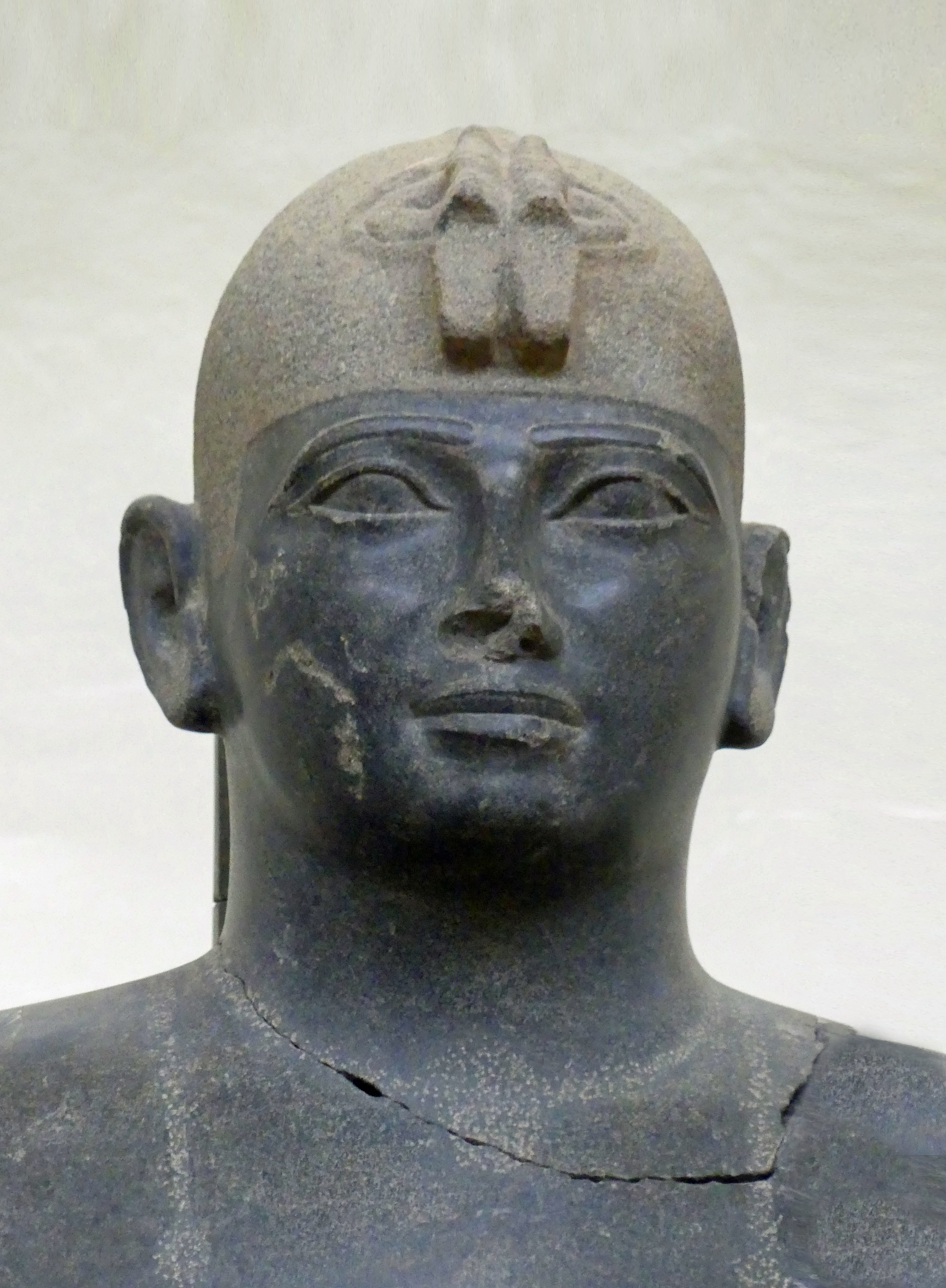
According to the popular chronologies, Kushite kings invaded and conquered Egypt some time around 750 BC, or about fifty years before this point in the ministry of Isaiah, when the prophet had written here that Egypt, Ethiopia and Sheba had already been given up by Yahweh God. It is not entirely clear that the king of the Kushites in the time of Hezekiah, the Taharqa or Tirhakah mentioned in Isaiah chapter 37, had any Nubian blood, since in the surviving monuments he appears to be Adamic, in spite of the modern propaganda which insists that he was black. However it is evident that many of the Ethiopians themselves, as well as some of his successors, did indeed have Nubian blood, and that the Nubian blood remained in Egypt long after the Kushite rulers were gone.
Then, as we had explained in various portions of this commentary on Isaiah, it was from Tirhakah, the Kushite king of Egypt who had adopted the title of pharaoh, that king Hezekiah of Judah had sought assistance against the encroaching Assyrians. So we read in Isaiah chapter 37: “8 So Rabshakeh returned, and found the king of Assyria warring against Libnah: for he had heard that he was departed from Lachish. 9 And he heard say concerning Tirhakah king of Ethiopia, He is come forth to make war with thee. And when he heard it, he sent messengers to Hezekiah, saying, 10 Thus shall ye speak to Hezekiah king of Judah, saying, Let not thy God, in whom thou trustest, deceive thee, saying, Jerusalem shall not be given into the hand of the king of Assyria.”
In Part 28 of this commentary on Isaiah, titled Fugitives from Justice, we documented the Assyrian inscriptions which attested to the collusion between Hezekiah and the Kushite king Tarhaqa, and the resulting defeat of the Kushites and Egyptians by the Assyrians. In light of this prophecy, this is significant. The Egyptians, ruled by these Kushites and in the company of Nubians, who are later described as “all the mingled people” in Ezekiel chapter 30, and as half black and half White in Jeremiah chapter 13, did attempt to assist Hezekiah against the Assyrians, but they failed, so they did not have the strength for the task, a task which was also in their own interests. Eventually, Sennacherib drove the Kushites out of Egypt, but Egypt was never a powerful nation again, at least on its own. There was a short-lived revival in the Persian period under Pharaoh Necho II, but the Egypt of Hellenistic and Roman times was actually composed, for the most part, of Macedonians and not Egyptians.
One aspect of this which we did not mention, as it is beyond the scope of Isaiah before this point, is that the Assyrian king Sargon II had made war with Ethiopia and made its king a prisoner, which is mentioned in his inscription just before his conquest of Samaria. [1] Then, after the defeat of the Egyptians and their Kushite rulers and their armies at Eltekeh by Sennacherib, for which Hezekiah was held accountable by the Assyrians [2], both Egypt and Ethiopia were further weakened in the campaigns of Esarhaddon, the successor of Sennacherib, who even titled himself king of Ethiopia in one of his inscriptions, so Egypt and Kush were weakened even further. [3] Later, Assyrian king Ashurbanipal, the son of Esarhaddon, marched against Egypt and Ethiopia in his very first campaign and conquered them once again, and that seems to have finally ended any further Ethiopian intervention in the affairs of Egypt or other nations in the north. [4]
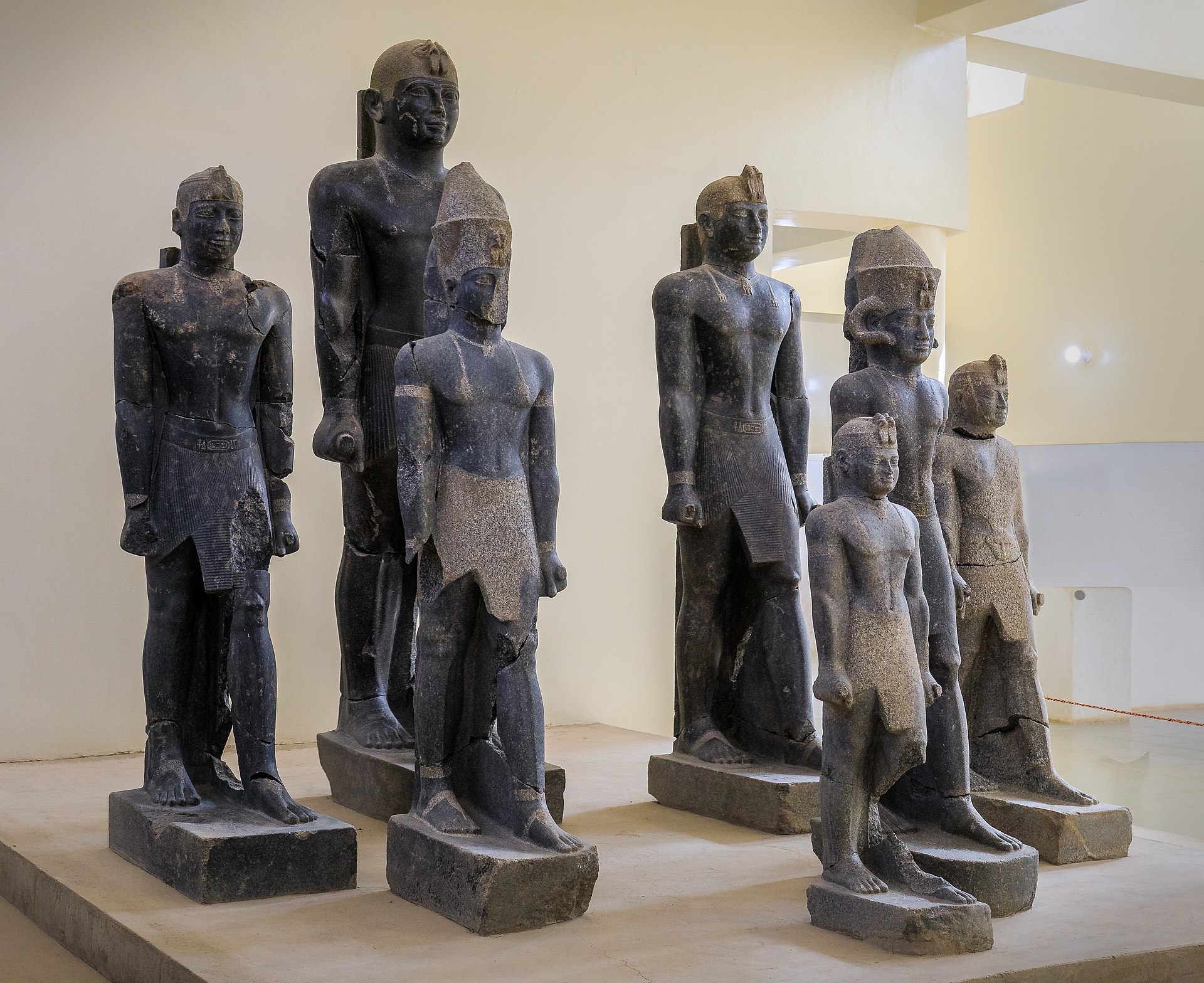
So not long after the time of Isaiah, Egypt, Ethiopia and Sheba were never again great powers, but race-mixed shadows of their former selves, and ultimately they became little but quarries for archaeological curiosities. So if Yahweh gave them up for the benefit of Israel, to whom had He given them up, but to the Nubians? They were given up to darkness, on behalf of the children of Israel. They were not able to resist the Assyrians, although formerly Egypt was quite powerful and had itself at one time held much territory in the Levant in various subject states, which had been lost only to the children of Israel.
The Word of Yahweh had insisted that both Israel and Judah would go into captivity, and if Egypt and Kush had been strong enough to help repel the Assyrians from Judah, that would have interfered with His plan. So He had given them up to darkness, so that the truth of His Word would become evident, and the warnings to Hezekiah and Judah, that it would be vanity to seek help from Egypt, would also be realized. When an Adamic nation is overrun by black Africans, or by any other non-Adamic race, it is surely given up to darkness, a literal darkness from which it can never again emerge.
Yet from this, the children of Israel are promised preservation in spite of their sins, and in spite of their having been spread abroad over the subsequent centuries:
5 Fear not: for I am with thee: I will bring thy seed from the east, and gather thee from the west; 6 I will say to the north, Give up; and to the south, Keep not back: bring my sons from far, and my daughters from the ends of the earth; 7 Even every one that is called by my name: for I have created him for my glory, I have formed him; yea, I have made him.
This last clause is a direct reference to the opening verse of the chapter, where the Word of Yahweh is addressing Jacob, whom Yahweh attested to having created, formed, redeemed and even also having named. Of all of the nations of the earth, only the children of Israel are acknowledged as being the children of God in the Old Testament, first in Deuteronomy chapter 14 where we read: “1 Ye are the children of the LORD your God…” With this it is also evident that the purpose of God is to gather and reconcile the children of Israel to Himself, which is also the purpose of Christ which He had professed where He said, as it is recorded in Matthew chapter 15, “24 But he answered and said, I am not sent but unto the lost sheep of the house of Israel.”
This is why the apostle James had written his lone epistle to “the twelve tribes which are scattered abroad”, which is found in the very first verse. This is also why Paul of Tarsus had attested that “ 6 … now I stand and am judged for the hope of the promise made of God unto our fathers: 7 Unto which promise our twelve tribes, instantly serving God day and night, hope to come. For which hope's sake, king Agrippa, I am accused of the Jews”, as Luke recorded his words in Acts chapter 26. This is also why, speaking of the Israelites of Judaea, John had written in chapter 11 of his Gospel account that the purpose of Christ was “52 … not for that nation only, but that also he should gather together in one the children of God that were scattered abroad.”
That gathering is in fulfillment of this very prophecy in Isaiah, and Christ had come to uphold the words of the prophets. Christ Himself had attested to this, as it is recorded in Matthew chapter 5: “17 Think not that I am come to destroy the law, or the prophets: I am not come to destroy, but to fulfill.” Here, addressing Jacob, the Word of Yahweh professed that He would gather the seed of Jacob, and no others. If Christ had intended to gather others, He would not be upholding the words of the prophets. Paul of Tarsus also recognized this, and wrote in Romans chapter 15 that: “8 Now I say that Jesus Christ was a minister of the circumcision for the truth of God, to confirm the promises made unto the fathers: 9 And that the [Nations] might glorify God for his mercy; as it is written, For this cause I will confess to thee among the [Nations], and sing unto thy name.” That last statement expresses the fulfillment of Isaiah 42:12 where we read: “Let them give glory unto the LORD, and declare his praise in the islands.”
In John chapter 10, Christ had told His adversaries “26 But ye believe not, because ye are not of my sheep, as I said unto you.” Then in another place, in Luke chapter 13, we read that Christ was teaching in the villages on His route to Jerusalem: “23 Then said one unto him, Lord, are there few that be saved? And he said unto them, 24 Strive to enter in at the strait gate: for many, I say unto you, will seek to enter in, and shall not be able. 25 When once the master of the house is risen up, and hath shut to the door, and ye begin to stand without, and to knock at the door, saying, Lord, Lord, open unto us; and he shall answer and say unto you, I know you not whence ye are: 26 Then shall ye begin to say, We have eaten and drunk in thy presence, and thou hast taught in our streets. 27 But he shall say, I tell you, I know you not whence ye are; depart from me, all ye workers of iniquity. 28 There shall be weeping and gnashing of teeth, when ye shall see Abraham, and Isaac, and Jacob, and all the prophets, in the kingdom of God, and you yourselves thrust out. 29 And they shall come from the east, and from the west, and from the north, and from the south, and shall sit down in the kingdom of God. 30 And, behold, there are last which shall be first, and there are first which shall be last.”
At least many of His adversaries were not of Israel, but rather, they were of the Edomites which had been converted to Judaism from the time of John Hyrcanus, whom Herod had appointed into all of the positions of power in Judaea before Christ had even been born. When Herod became king of Judaea he had also destroyed all the principle men of Jerusalem associated with the family of the last legitimate high priests. [5] So if Christ did not know any of the Edomite rulers of Jerusalem, it is because they are not of Israel, and therefore they were not of His sheep, as He told them in John chapter 10. In Amos chapter 3 we read: “1 Hear this word that the LORD hath spoken against you, O children of Israel, against the whole family which I brought up from the land of Egypt, saying, 2 You only have I known of all the families of the earth: therefore I will punish you for all your iniquities.” The prophet Amos was an early contemporary of Isaiah. Therefore it is evident, that the many who would come from the east, west, north and south to gather in the Kingdom of God, as Christ describes in Luke chapter 13, are the same as those of whom it is said here, where Yahweh is still addressing Jacob, that “I will bring thy seed from the east, and gather thee from the west; 6 I will say to the north, Give up; and to the south, Keep not back: bring my sons from far, and my daughters from the ends of the earth”, and therefore Christ had professed that He came for no others but the “lost sheep of the house of Israel.”
Now it is they who are described as having been blind, and evidently, they are still blind:
8 Bring forth the blind people that have eyes, and the deaf that have ears. 9 Let all the nations be gathered together, and let the people be assembled: who among them can declare this, and shew us former things? let them bring forth their witnesses, that they may be justified: or let them hear, and say, It is truth.
Here “all the nations” can only refer to all the nations of the children of Israel which had grown into existence once they had been scattered abroad in captivity, either the Egyptian or Assyrian captivity. This is established in verse 10, where these nations are identified both as Yahweh’s witnesses, and as His servant whom He had chosen. For that reason, in Romans chapter 4 Paul had explained the fulfillment of the promise to Abraham in his own time, as his seed had become many nations “as it is written”, and that Yahweh God had spoken of those nations as if they had existed, even before they existed. Throughout these chapters of Isaiah, Jacob or Israel is identified as the servant of Yahweh on several occasions, and in the opening verse of chapter 44 we read: “1 Yet now hear, O Jacob my servant; and Israel, whom I have chosen.” So in this case, the word all must have a context, meaning all of the nations of Israel, and not including any others, these are the nations to whom the apostles of Christ had later brought His Gospel. As Christ had attested, He came to open the eyes of the blind who are described here, but his healing of those who were physically blind during the course of His ministry was only symbolic of His greater purpose.
Where we read “let the people be assembled: who among them can declare this, and shew us former things? let them bring forth their witnesses, that they may be justified”, this evokes The Test of God which the Word of Yahweh had presented in Isaiah chapter 41, where, speaking in reference to the idols of the people, we read: “22 Let them bring them forth, and shew us what shall happen: let them shew the former things, what they be, that we may consider them, and know the latter end of them; or declare us things for to come. 23 Shew the things that are to come hereafter, that we may know that ye are gods: yea, do good, or do evil, that we may be dismayed, and behold it together.” But of course, there are no such witnesses among their idols, and therefore Yahweh now informs the people themselves:
10 Ye are my witnesses, saith the LORD, and my servant whom I have chosen: that ye may know and believe me, and understand that I am he: before me there was no God formed, neither shall there be after me. 11 I, even I, am the LORD; and beside me there is no saviour.
So the children of Israel are Yahweh’s witnesses, even if they remain in their state of blindness. But witnesses do not necessarily have to be cognizant of their own testimony, and especially when, by their very actions, they themselves are the testimony. They are the witnesses of Yahweh because not remembering their own history or their own roots, they had nevertheless heard His voice and both received and accepted the Gospel when it reached their ears. In all of Christian history, there were only a few tribes in Europe which had been persuaded to accept the Gospel only after some coercion by their neighbors.
However Paul of Tarsus asserted that the entire world had heard the Gospel even in his own time, first in Romans chapter 1 where he told the Christians in Rome that “8 First, I thank my God through Jesus Christ for you all, that your faith is spoken of throughout the whole world.” Then Paul wrote concerning the report of the Gospel, in Romans chapter 10: “16 But they have not all obeyed the gospel. For Esaias saith, Lord, who hath believed our report? 17 So then faith cometh by hearing, and hearing by the word of God. 18 But I say, Have they not heard? Yes verily, their sound went into all the earth, and their words unto the ends of the world.” The Romans to whom he had written had themselves accepted Christianity even before Paul had ever reached Rome, so there were other apostles who also brought the Gospel to the isles and coastlands of the West.
Here we are not speaking of the imperialism conducted under the guise of Christianity, which is basically the reason for the formation of the Roman Catholic Church, something which is especially evident from the time of Justinian, who created the office of the Papacy and its authority by issuing a new law to enforce and uphold the notion that the bishop of Rome should rule over all Christendom, and ultimately, over all the empire. Not long after the Council of Nicaea in 325 AD, there were tribes of the Goths and Alans which, according to the Gothic historian Jordanes, had become Christian by the time of the Roman emperor Valens, who ruled from about 364 to 378 AD. [6] Earlier that century, Christians in Britain had sent 3 bishops to the Council of Arles in Gaul, which was organized by Constantine to decide on the Donatist heresy, in 314 AD [7]. The Edict of Toleration which ended the persecution of Christians in the Empire had only been issued in 311 AD by Galerius in his Edict of Serdica, and in 313 by Constantine in his Edict of Milan. So there were Christians in Britain and throughout the Empire long before Christianity was accepted by Rome, and even before the council of Nicaea. Christianity was not made the official religion of the Empire until the time of the the Edict of Thessalonica issued by emperor Theodosius I in 380 AD.
Of course, there is much more evidence of Christianity in Europe in early Christian writings. But a century before any of these events, a silver amulet bearing a Christian inscription which mentions Christ Himself on several occasions was buried on the neck of a man in a 3rd century AD Roman grave in Frankfurt, Germany. [8] So aside from the testimony of Paul of Tarsus or the so-called “Church Fathers”, it is evident that Christianity was spreading across the Roman world in spite of the government prohibitions and the lack of organized churches. While these presumed Europeans had not been aware of their past identity as the children of Israel in captivity, they unwittingly fulfilled the Word of God by accepting Christ, as they were told here in Isaiah, and He said in John chapter 10, “14 I am the good shepherd, and know my sheep, and am known of mine. 15 As the Father knoweth me, even so know I the Father: and I lay down my life for the sheep. 16 And other sheep I have, which are not of this fold: them also I must bring, and they shall hear my voice; and there shall be one fold, and one shepherd”, and a little further on, “27 My sheep hear my voice, and I know them, and they follow me.”
Those who brought Christianity into the interior of Europe also fulfilled the prophecy found in Ezekiel chapter 34 where the Word of Yahweh said: “6 My sheep wandered through all the mountains, and upon every high hill: yea, my flock was scattered upon all the face of the earth, and none did search or seek after them.” Then, a little further on in that chapter: “11 For thus saith the Lord GOD; Behold, I, even I, will both search my sheep, and seek them out. 12 As a shepherd seeketh out his flock in the day that he is among his sheep that are scattered; so will I seek out my sheep, and will deliver them out of all places where they have been scattered in the cloudy and dark day.”
So because the scattered children of Israel had accepted Christ, even at a time when they had risked their lives to declare His glory, where Isaiah continues we read:
12 I have declared, and have saved, and I have shewed, when there was no strange god among you: therefore ye are my witnesses, saith the LORD, that I am God. 13 Yea, before the day was I am he; and there is none that can deliver out of my hand: I will work, and who shall let it?
Where Christ had insisted that His sheep hear His voice, we shall read a little further in John chapter 10: “27 My sheep hear my voice, and I know them, and they follow me: 28 And I give unto them eternal life; and they shall never perish, neither shall any man pluck them out of my hand. 29 My Father, which gave them me, is greater than all; and no man is able to pluck them out of my Father's hand. 30 I and my Father are one.” In verse 10 here in Isaiah chapter 43, we read the declaration that “before me there was no God formed, neither shall there be after me.” If Christ were a god on a trinity, and Yahweh the Father were a god on a trinity, then Isaiah is a liar and he should not have written this statement in verse 10 here that “before me there was no God formed, neither shall there be after me.” But the truth is that the trinity is a lie, and Yahshua Christ is one and the same God as Yahweh the Father.
So the imperial Church declared a trinity of gods, but these we must reject, as Israel has but One God and it is He who is also Yahshua Christ. Here He declares that “before the day was I am he”, or as the New American Standard Bible has it, “Even from eternity I am He” and Christ had declared on that day that “I and My Father are One.” Christ also said that “Before Abraham was, I am”, as it is recorded in John chapter 8 (8:58). A rather recent discovery called The Megiddo Mosaic had evidently served as the floor of a Christian estate in Galilee in the 3rd century AD. The Mosaic contains several illustrations and inscriptions, one of which reads: “Akeptous, the friend of God, has offered the table to God Jesus Christ for remembrance.” [9] They ate in memory of Christ, and recognized Him as God, not as a god, or a person in a trinity of gods, but as God, which He had also attested.
Here in Isaiah, Yahweh declares that “before the day was I am He”, and when that day came when He would redeem His people, Christ had told His adversaries, as it is recorded in John chapter 8: “ 24 I said therefore unto you, that ye shall die in your sins: for if ye believe not that I am he, ye shall die in your sins. ” Then, a little further on they asked Him: “Who art thou?” and in part, where He answered we read: “28 Then said Jesus unto them, When ye have lifted up the Son of man, then shall ye know that I am he, and that I do nothing of myself; but as my Father hath taught me, I speak these things.” The apostle Thomas realized the truth of the words “then ye shall know that I am He” where after the Resurrection, he saw the marks of the Passion of Christ and declared for Him to be “My Lord and my God”, as it is recorded in John chapter 20 (20:28).
Now there is a rather portentous statement which is actually a promise to deliver Israel from a situation which had not even yet developed, so it is a prophecy with different levels of fulfillment:
14 Thus saith the LORD, your redeemer, the Holy One of Israel; For your sake I have sent to Babylon, and have brought down all their nobles, and the Chaldeans, whose cry is in the ships.
At this point in the ministry of Isaiah, Babylon is not yet an empire, although it is a significant city within the Assyrian empire. It will not be an empire for about another ninety-five years, until the time of Nebuchadnezzar II. Furthermore, this address is to all of Israel, to Jacob in general, and only a portion of the tribes of Judah, Levi and Benjamin had gone into Babylonian captivity, while much larger portions had gone into Assyrian captivity, or had emigrated to Europe by sea either at the time of the Exodus, or in the course of the Judges and Kingdom periods which had preceded the Assyrian deportations.
Therefore it is plausible that this prophecy may be interpreted as having a far-vision fulfillment, and being more relevant to the fall of Mystery Babylon and the call to “come out of her”. But it may also have have a near-vision fulfillment, for the time when the Babylonian empire does come. First, there is the perspective of Judah, the remnant of which will go into Babylonian captivity. Then, at the time of the Babylonian Empire, many Israelites of the Assyrian captivity had still remained in lands formerly controlled by the Assyrians, and those lands were ruled over by both the Babylonians, and then by the Persians at the later time of their empire. However it is difficult to determine how many of them remained, along with the people of Judah who remained in Babylonia, and did not flee the Chaldaeans. Many of them remained in the Persian period and continued in their presence up to the time of Christ, as they are attested in Acts chapter 2.
Having a far-vision fulfillment, this is an even greater assurance, that for the sake of Israel, the Mystery Babylon of the Revelation shall certainly be destroyed, and was foreseen and addressed as soon as Israel had gone into captivity. Ancient Babylon was not known as a sea-faring mercantile city, being far upstream on the Euphrates river, so the cry in the ships seems to be much more relevant to the far-vision fulfillment and the description of the merchants on the sea who are described as lamenting the fall of Mystery Babylon in Revelation 18:17. There are other parallels in this chapter, particularly between Mystery Babylon and the sufferings of Egypt, Ethiopia and Sheba here. In the Revelation, Mystery Babylon is described as falling some time before the return of Christ and His destruction of all of His enemies. This seems to be concurrent with the Camp of the Saints which are surrounded by the enemies of God, in Revelation chapter 20, and also with the visions of the armies of Gog and Magog looting the children of Israel in the land of unwalled villages in Ezekiel chapters 38 and 39.
Yet in the Gospel of Christ He Himself describes the time of the “coming off the Son of Man” and says, as it is recorded in Matthew chapter 24: “37 But as the days of Noe were, so shall also the coming of the Son of man be. 38 For as in the days that were before the flood they were eating and drinking, marrying and giving in marriage, until the day that Noe entered into the ark, 39 And knew not until the flood came, and took them all away; so shall also the coming of the Son of man be.”
In the days of Noah, the Nephilim were taking the daughters of Adam for wives, and for that reason, Yahweh God brought destruction down upon the descendants of Adam, saving only Noah, his sons, and their wives. Now, under the rule of Mystery Babylon, even the children of Israel have once again sinned in that same manner, and for their sins, many of them have already been given to darkness, as the black and non-Adamic races overrun their lands and feed themselves from their labors. So in this regard, perhaps the reference to Babylon was also made here for that reason.
Note that addressing Jacob and Israel, as the Word of Yahweh has been doing here in this chapter since its opening verse, Yahweh referred to Himself as “the Holy One of Israel” in verses 3 and 14, and here in verse 14 He called Himself “your Redeemer”, once again speaking to Jacob Israel. Likewise, Christ had come to redeem Israel, which is stated explicitly in the words of Zacharias the father of John the Baptist, as they were recorded in Luke chapter 1: “68 Blessed be the Lord God of Israel; for he hath visited and redeemed his people, 69 And hath raised up an horn of salvation for us in the house of his servant David; 70 As he spake by the mouth of his holy prophets, which have been since the world began: 71 That we should be saved from our enemies, and from the hand of all that hate us; 72 To perform the mercy promised to our fathers, and to remember his holy covenant; 73 The oath which he sware to our father Abraham”. Saying those things, Zacharias must have had this very chapter of Isaiah in mind. Now the where Isaiah continues the language is even more exclusive:
15 I am the LORD, your Holy One, the creator of Israel, your King.
So Yahweh is the Creator of Israel, and He is King of Israel. While Yahweh is described as the Creator of the wider Adamic race, and even of the whole earth, there were other races, such as the Nephilim and Zuzim and several others in Genesis chapters 14 and 15, which were not of Adam or of Noah, and which He never took credit for having created. Then throughout the balance of Scripture, in spite of all other nations Yahweh calls Himself “your King”, in reference to Israel. So where “Christ is King”, He is the King of Israel, but He is not the king of the Nephilim or the Zuzim in that same sense. Later in Isaiah, in chapter 63, the children of Israel are portrayed by the prophet as having said: “17 O LORD, why hast thou made us to err from thy ways, and hardened our heart from thy fear? Return for thy servants' sake, the tribes of thine inheritance. 18 The people of thy holiness have possessed it but a little while: our adversaries have trodden down thy sanctuary. 19 We are thine: thou never barest rule over them; they were not called by thy name.”
Now here the subject is evidently still Babylon, and in this context we must consider it to have a far-vision fulfillment in relation to Mystery Babylon:
16 Thus saith the LORD, which maketh a way in the sea, and a path in the mighty waters; 17 Which bringeth forth the chariot and horse, the army and the power; they shall lie down together, they shall not rise: they are extinct, they are quenched as tow.
In the immediate or near-vision fulfillment the children of Israel still had many wars, chariots, horses and armies in their future, so this must also have a far-vision fulfillment. In that manner, this seems to evoke visions of the aftermath of the Wedding Supper of the Lamb following the fall of Mystery Babylon, described in Revelation chapter 19: “19 And I saw the beast, and the kings of the earth, and their armies, gathered together to make war against him that sat on the horse, and against his army. 20 And the beast was taken, and with him the false prophet that wrought miracles before him, with which he deceived them that had received the mark of the beast, and them that worshipped his image. These both were cast alive into a lake of fire burning with brimstone. 21 And the remnant were slain with the sword of him that sat upon the horse, which sword proceeded out of his mouth: and all the fowls were filled with their flesh.”
However on the other hand, Babylon is mentioned again in Isaiah in each of chapters 47 and 48, where the children of Israel are encouraged to “flee from the Chaldaeans”, so we shall discuss this further when we encounter those chapters, because there must also be a near-vision fulfillment.
Now there is another encouragement:
18 Remember ye not the former things, neither consider the things of old. 19 Behold, I will do a new thing; now it shall spring forth; shall ye not know it? I will even make a way in the wilderness, and rivers in the desert.
Receiving the Gospel of Christ, the children of Israel in the places of their captivity should forget their sins, their idolatry, and understand that Yahweh their God shall provide for them in the way of the blind. But even then, they are described as remaining blind here. Looking back to Isaiah chapter 35, perhaps they shall remain blind until the fall of Mystery Babylon and the time when they are finally avenged by their God, where we read: “4 Say to them that are of a fearful heart, Be strong, fear not: behold, your God will come with vengeance, even God with a recompence; he will come and save you. 5 Then the eyes of the blind shall be opened, and the ears of the deaf shall be unstopped. 6 Then shall the lame man leap as an hart, and the tongue of the dumb sing: for in the wilderness shall waters break out, and streams in the desert.” The ministry of the Gospel of Christ should open the eyes of the blind, but perhaps it won’t until Mystery Babylon falls and He returns to destroy His enemies.
Now, on account of the way made in the wilderness and the rivers in the deserts, there are collateral benefits for others:
20 The beast of the field shall honour me, the dragons and the owls: because I give waters in the wilderness, and rivers in the desert, to give drink to my people, my chosen.
The Septuagint has the last clause to read “… to give drink to my chosen race.” While in Revelation chapter 18 Mystery Babylon is described as having “become the habitation of devils, and the hold of every foul spirit, and a cage of every unclean and hateful bird” (18:2), even the birds, the dragons and the beasts of the field benefit from the blessings which befall the children of Israel, for better or worse. However the benefits are not meant for them, although even the dogs eat the crumbs which the children spill under the table, rather, the benefits are only meant for the children:
21 This people have I formed for myself; they shall shew forth my praise.
In Christ, the children of Yahweh, which are the children of Israel, certainly would show forth His praise, but now they are criticized for what things they had done:
22 But thou hast not called upon me, O Jacob; but thou hast been weary of me, O Israel. 23 Thou hast not brought me the small cattle of thy burnt offerings; neither hast thou honoured me with thy sacrifices. I have not caused thee to serve with an offering, nor wearied thee with incense. 24 Thou hast bought me no sweet cane with money, neither hast thou filled me with the fat of thy sacrifices: but thou hast made me to serve with thy sins, thou hast wearied me with thine iniquities.
The New American Standard Bible has the last clause of verse 24 to read: “Rather you have burdened Me with your sins, You have wearied Me with your iniquities.” With that, the translation of the clause in The Dead Sea Scrolls Bible closely agrees. Yahweh is attesting that He had not burdened Israel with sacrifices and offerings, but they nevertheless have burdened Him with their sins. However in the Old Testament, Israel was obligated to perform such sacrifices, and they forsook them in favor of their sins. It is only under the New Covenant in Christ that the children of Israel are not burdened with sacrifices and offerings. So this portion of the chapter must also refer to the same far-vision as the prophecy of the fall of Mystery Babylon. However the passage which follows may also pertain only to Christ, as the context is the New Covenant, where sacrifices and offerings are not required of the people:
25 I, even I, am he that blotteth out thy transgressions for mine own sake, and will not remember thy sins.
Israel can only be forgiven for sin in the wake of repentance, as Christ had also urged His disciples to repent of their sins, and to keep His commandments. While Christians did at one time acknowledge and repent from their sins, now in these last days they are once again sinning as it was in the days of Noah, so we see another plea for repentance:
26 Put me in remembrance: let us plead together: declare thou, that thou mayest be justified. 27 Thy first father hath sinned, and thy teachers have transgressed against me.
Of course, thy first father is Adam, and this seems to suggest a proclivity of the Adamic man to sin. As for the teachers, this must be a reference to the Levites, who were the teachers and administrators of the old kingdom of Israel, but it insinuates that the shepherds of the New Covenant period would commit the same sins.
So in the discourse from Ezekiel chapter 34 concerning the seeking out of the lost sheep, which we had earlier cited verses 6, 10 and 11 of this chapter, we had omitted a portion which we shall now read: “7 Therefore, ye shepherds, hear the word of the LORD; 8 As I live, saith the Lord GOD, surely because my flock became a prey, and my flock became meat to every beast of the field, because there was no shepherd, neither did my shepherds search for my flock, but the shepherds fed themselves, and fed not my flock; 9 Therefore, O ye shepherds, hear the word of the LORD; 10 Thus saith the Lord GOD; Behold, I am against the shepherds; and I will require my flock at their hand, and cause them to cease from feeding the flock; neither shall the shepherds feed themselves any more; for I will deliver my flock from their mouth, that they may not be meat for them.” Here the shepherds act like wolves, rather than shepherds. The shepherds of the people are their teachers, and here in Ezekiel the guilt for the sins of the people is laid upon them, just as it is here in Isaiah of some future period, which seems to be relevant to the time of Mystery Babylon. The word pastor is from a Latin word for shepherd, and Paul of Tarsus described shepherds as teachers in Ephesians chapter 4, in the context of a Christian assembly: “11 And He has given the ambassadors, and the interpreters of prophesy, and those who deliver the good message, and the shepherds - teachers, 12 towards the restoration of the saints, for the work of ministering for building of the body of the Anointed, 13 until we all would attain to the unity of the faith and of the acknowledgment of the Son of Yahweh, at man perfected, at the measure of the stature of the fullness of the Anointed; 14 in order that we would be infants no longer - being tossed as waves and carried about in every wind of teaching by the trickery of men, in villainy for the sake of the systematizing of deception.” Clearly, the shepherds of Israel have failed once again, in this same manner, under the New Covenant.
On account of the shepherds of the people, and in turn, the sins which the people themselves had committed:
28 Therefore I have profaned the princes of the sanctuary, and have given Jacob to the curse, and Israel to reproaches.
Evidently, one of those curses is to be overrun with African blacks, to be given to darkness, as we see here had happened to Egypt, Ethiopia and Sheba. So in Deuteronomy chapter 28 we read, in the warnings of punishment for disobedience: “32 Thy sons and thy daughters shall be given unto another people, and thine eyes shall look, and fail with longing for them all the day long: and there shall be no might in thine hand.” Our sons and daughters being found with strangers of other races, and that is a consequence in punishment for other sins. So they are little but booty in the war against God, and trophies on the mantle of devils, and until we repent, there is no might in our hand. Given over to darkness, the condition of Egypt, Ethiopia and Sheba today is a testament to the result of our sin, and it is also our own fate, except that Yahweh our God has promised to save us.
This concludes our commentary on Isaiah through chapter 43.
Footnotes
1 Ancient Records of Assyria and Babylonia, Volume II: Historical Records of Assyria from Sargon to the End, Daniel David Luckenbill, Ph.D., University of Chicago Press, 1926, p. 40.
2 ibid., p. 143.
3 ibid., pp. 222, 257, 286.
4 ibid., p. 292.
5 Antiquities of the Judaeans, Flavius Josephus, 15.1 ff., 20.247-249.
6 The Origin and Deeds of the Goths, Jordanes, translated by Charles C. Mierow, chapter 25, https:// christogenea.org/references/origin-and-deeds-goths-jordanes, accessed September 5th, 2025.
7 The Council of Arles (AD 314), Fourth Century Christianity, https://www.fourthcentury.com/the-council-of-arles-ad-314/, accessed September 5th, 2025.
8 Silver amulet unearthed in Frankfurt grave Is the oldest evidence of Christianity north of the Alps, by Dario Radley, Archaeology News, https://archaeologymag.com/2024/12/oldest-evidence-of-christianity-north-of-the-alps/, accessed September 5th, 2025. [Screenshot.]
9 Jesus Christ is God - The Megiddo Mosaic, https://christogenea.org/references/jesus-christ-god-megiddo-mosaic, accessed September 5th, 2025.