Bible Basics - Part 6

William Finck and Sven Longshanks of Radio Aryan discuss the marriage relationship between Yahweh God and the children of Israel, as it is depicted in the New Testament beginning with the proclamation of John the Baptist that Yahshua Christ was the expected bridegroom, as beforetimes Yahweh had promised to betroth the children of Israel anew in Hosea chapter 2. We cite several passages from the gospels depicting the relationship between Christ and Israel in that manner, and we also cite several passages, especially from Isaiah and Hosea, which promised that same thing, that the very same children of Israel would once again be betrothed and reconciled to God at some point in the future. 
 

Bible Basics - Part 5

William Finck and Sven Longshanks of Radio Aryan discuss the marriage relationship between Yahweh God, fulfilling the part of a husband, and the collective nation of the children of Israel, fulfilling the part of a bride, which is depicted in the Old Testament beginning with the covenant agreement at Sinai, and ending with the divorce, or putting away, of Israel and Judah in the Assyrian and Babylonian deportations. We cite several passages from the prophets depicting the relationship between God and Israel in that manner, and we also cite several passages, especially from Isaiah and Hosea, which promised that in spite of the divorce, that the very same children of Israel would once again be betrothed and reconciled to God at some point in the future. 
 

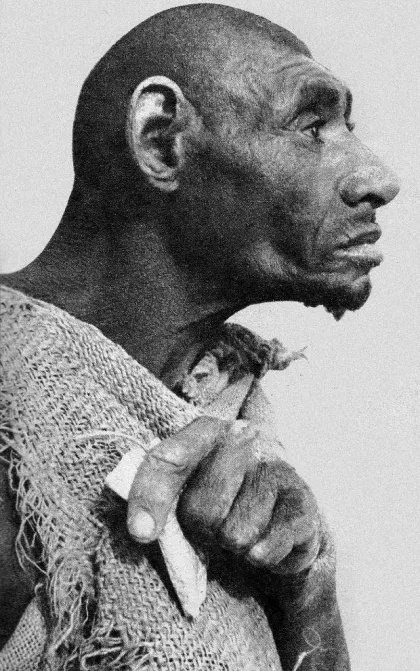
Identifying the Biblical “Beast of the Field”, Part 3

Identifying the Biblical “Beast of the Field”, Part 3

In my presentation last week, The Role of Faith in a Successful Insurgency, Movement, or Community, I discussed the fact that if we as Christians are going to overcome this world, then we must dehumanize our enemies, referring to those who are also the enemies of Christ. While, once again, I cannot prove in a few statements that all of the other or non-White races are among those enemies, we have proven that long ago in other presentations here at Christogenea. In brief, in the New Testament parables of Christ, there are sheep and there are goats, and only one particular race of people are ever identified as sheep, while all the other nations are goats. In the Revelation, the serpent sends a flood from his mouth after the Woman, the Bride of Christ who represents the children of Israel in their reconciliation to God which is through Christ, and that vision corresponds to the prophecy of Satan gathering all of the world’s nations against the Camp of the Saints, which are the same White Christian people of God. These statements only summarize the Biblical proofs by which we may support our position.

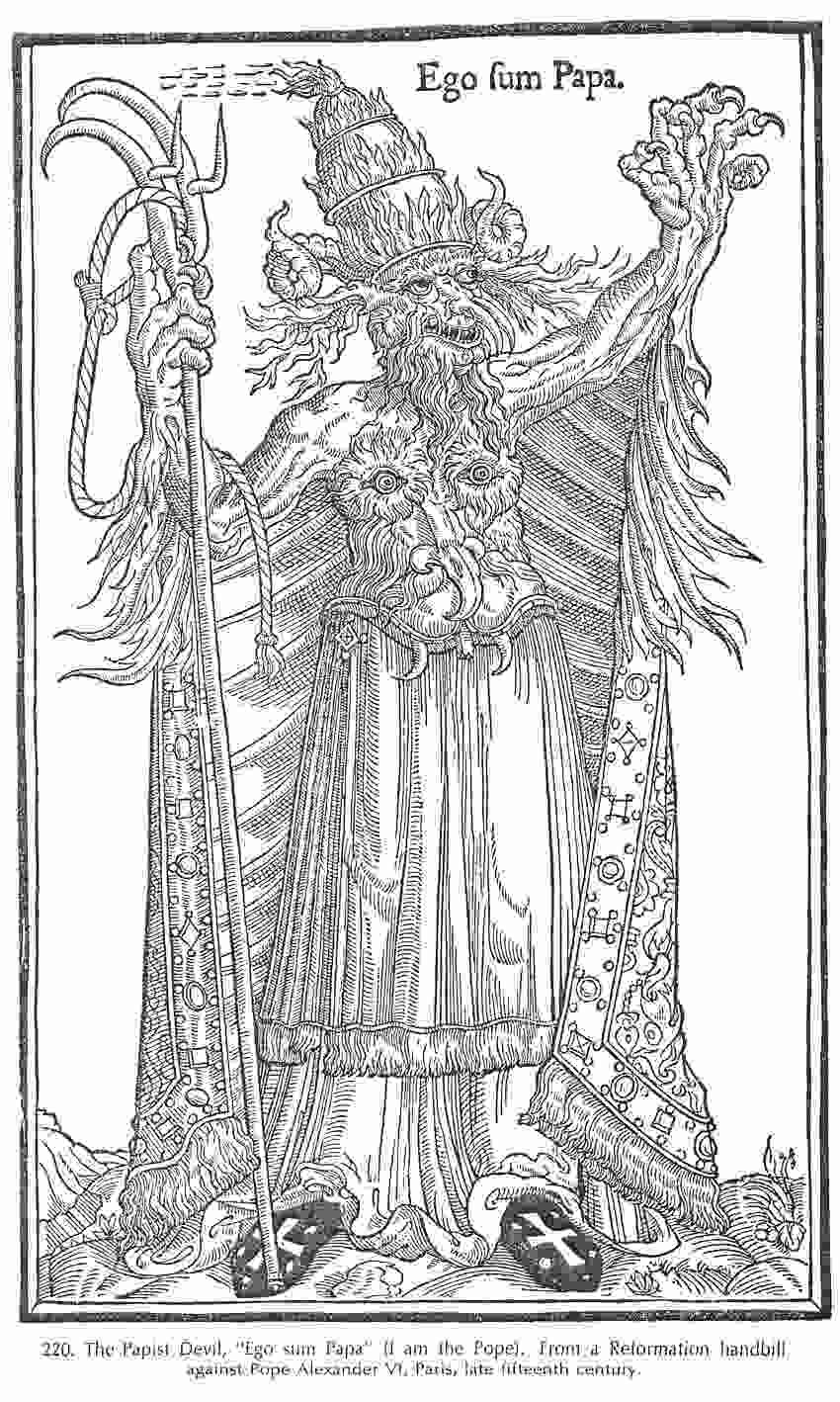
So in last week’s presentation I included material showing that it was not very long ago, perhaps only a hundred and twenty years, that books were printed by both poets and churchmen which debated whether the non-White races were even human, as many of them had indeed considered the non-White races to be beasts, or devils, and not people. Then I made the assertion that the Bible already does that same thing for us, that it dehumanizes our enemies, but that I could not possibly offer all of the proofs in a short space. While many of those proofs are found in our Pragmatic Genesis series and in other presentations, this series on the so-called Beast of the Field is meant to be yet another part of that proof, but from a different perspective.

Bible Basics - Part 3

William Finck and Sven Longshanks of Radio Aryan discuss the Abrahamic Covenant, the imposition of the practice of circumcision and what it meant, and related Biblical topics which are the basis for understanding Christianity and the New Covenant.

William Finck's opening notes and some of the Scriptures discussed are found below:

Bible Basics - Part 2

William Finck and Sven Longshanks of Radio Aryan discuss the historicity of Genesis, the Genesis chapter 10 table of nations, and some of the archaeological evidence which supports the truths of our Bibles, and more...

NEW: try this link in a podcast catcher app or on iTunes: https://christogenea.org/podcasts/mp3feed

William Finck's opening notes are found below:

Identifying the Biblical “Beast of the Field”, Part 2

Identifying the Biblical “Beast of the Field”, Part 2

I have seen many people scoff at Identity Christians simply because of the disagreement which those who label themselves as “Christian Identity” have with one another on a multitude of Biblical topics. We have the benefit of a creed with no pope, no bishops, no ecumenical councils, and few organized assemblies. But what we have in place of those things are ten thousand would-be popes, bishops and council leaders. If we are ever going to overcome the world, we all need to get on the same page, but the only legitimate page to be on is that which has written upon it the Word of God. True Christian humility is a willingness to agree with the Word of God, and be able to come to an agreement with one another based upon the Word of God. But instead of humble men we have innovators, who would pervert the Word of God for their own agenda.

When someone insists that non-White races of so-called people are described as having been created by Yahweh on the sixth day of Genesis as beasts under the label of chay or chayah, and then every single Biblical example that they bring forth from the Old Testament in order to prove their point has the word beast from the Hebrew word behemah rather than chay or chayah, it should be perfectly evident that there is an agenda, and no care for truth....

Identifying the Biblical “Beast of the Field”, Part 1

Identifying the Biblical “Beast of the Field”, Part 1

In recent weeks, we have presented both our own views and those of Clifton Emahiser on the ridiculous so-called 6th and 8th Day Creation theory. Now we shall address another issue which is very similar to that theory, which is the idea that certain races of hominids, from which we have the non-White races of today, were among the “living creature” (chay nephesh) or the “beast of the earth” (chay erets) created in Genesis chapter 1 where we read: “24 And God said, Let the earth bring forth the living creature after his kind, cattle, and creeping thing, and beast of the earth after his kind: and it was so. 25 And God made the beast of the earth after his kind, and cattle after their kind, and every thing that creepeth upon the earth after his kind: and God saw that it was good.” This is the usual fall-back position for those who endeavor to squeeze the beast races of hominids, the non-White races, into the Creation of God, as if any of them could possibly be “good”.

When I began my presentation of The Only True Adam of Genesis series in late June, I explained that I did so in part to address “certain so-called pastors in Christian Identity who cling to this fallacy of an 8th-Day Creation, and have the nerve to ridicule us for refuting it.” Now one of those same individuals, whom I will not yet name, is attempting to argue with me in social media over the idea that Yahweh created the non-White races as “beasts”. So he clings to two ideas for the creation of non-Whites, the 6th & 8th Day heresy, and this concept which we will begin to address here this evening. One way or another, there are so many fools who feel that they have to squeeze non-White races into the Creation of God, when all this time a “tree of the knowledge of good and evil” representing the corruption of Yahweh’s creation by fallen angels stares them in the face, and they overlook the significance.

Bible Basics - Part 1

William Finck and Sven Longshanks of Radio Aryan discuss the historicity of Genesis, the Genesis chapter 10 table of nations, and some of the archaeological evidence which supports the truths of our Bibles, and more...

NEW: try this link in a podcast catcher app or on iTunes: https://christogenea.org/podcasts/mp3feed

William Finck's opening notes are found below:

William Finck and Sven Longshanks of Radio Aryan discuss the historicity of Genesis, the Exodus, and some of the archaeological evidence which supports the truths of our Bibles. The true nature of the sacrifice of Abraham compared to similar acounts of human sacrifice in European literature, the ancient secular historical support for the Exodus account, a brief comparison of the Genesis account to the creation accounts of the surrounding nations, and more...

NEW: try this link in a podcast catcher app or on iTunes: https://christogenea.org/podcasts/mp3feed

Remembering Clifton Emahiser, Good and Bad Figs

Tonight we continue mourning the death of our long-time friend and fellow-worker, Clifton Emahiser, who passed on Wednesday afternoon. I did my best to explain how that happened in a few words at the beginning of last night’s program, but I have not yet posted that recording. I will do that soon. Initially, I did not plan on writing a separate introduction for this evening, and have since changed my mind.

Last night, I asked for suggestions as to what to play today, and a dear friend and someone who has followed our work since 2009 made a request which would not have otherwise crossed my mind. He wanted me to replay a January, 2011 program that Clifton had done with me, which put the final nail in the coffin of my relationship with the fraud, the great impersonator, Eli James.

Covenant Theology vs. Replacement Theology with Clifton Emahiser

William Finck talks to Clifton Emahiser about Covenant Theology vs. Replacement Theology, and Clifton's experiences debating with members over his own family over his Christian Identity beliefs.

As probably all of our listeners know, Clifton Emahiser had suffered a bad fall in his home last August, so we moved him here to Florida to stay with us. Just before his accident, Clifton had sent me a few short essays to proofread, and finally, after ten months, I have been getting around to it. We posted two of those essays on his website this morning. The first, we presented in a discussion here a few weeks ago, which was Pitfalls Found in Biblical Research Materials, Part 1. I labelled that as “Part 1”, and not Clifton, hoping to encourage him to write a sequel, because it is a topic about which I am certain he has a lot more to say. Now we have Clifton here with us once again to discuss the second of those essays, which I also posted to his website this morning.

Sadly, this turned out to be Clifton's last podcast. We miss him dearly.

Pitfalls Found in Biblical Research Materials, Part 1 with Clifton Emahiser


Pitfalls Found in Biblical Research Materials, Part 1 with Clifton Emahiser

Last August Clifton Emahiser, being 90 years old at the time, had taken a bad fall in his home. At that time he realized that he really could not live alone safely any longer, and we brought him here to Florida to stay with us. In the meantime, just before his accident Clifton had sent me three new short essays to proofread, which I never got to until now. So we will begin trying to make that up to him with this evening’s presentation. Here we have Clifton Emahiser with us once again, to present and discuss one of those short essays, which he had titled The Pitfalls Found In Biblical Commentaries, Lexicons & Dictionaries.

It seems to me that Clifton may have planned for this to be another multi-part series, since while the title is broad in scope, here he mainly focuses on the rather recently-developed denominational doctrines of Futurism and Preterism, and how they have affected modern Christian thinking which is reflected in their inclusion in certain popular Study Bibles and Commentaries. While Clifton has treated this topic in the past, here it is presented in a somewhat different context, and he goes further to show how recent these and other ideas about Scripture have been developed by certain denominations.

So now we shall present Clifton’s essay, along with our own comments and discussion:

The Pitfalls Found In Biblical Commentaries, Lexicons & Dictionaries, by Clifton Emahiser

While some of these Biblical helps are better than others, even the best have some serious errors! For instance some Bible cross-references can lead one astray, so let’s consider some of the better center-references found in a few Bibles:

If you have a King James Version Bible with the proper center reference, you can very readily prove Two Seedline teaching with it, for it will take you from one supporting verse of Scripture to another almost endlessly on the subject. (Not that the King James Version is an especially advisable Bible to use for study, as it is alleged to contain approximately 27,000 translation mistakes.)

Christianity in the Old Testament, Part 6, Israel in the New Testament, by Bertrand Comparet, with Commentary

Christianity in the Old Testament, Part 6, Israel in the New Testament, by Bertrand Comparet, with Commentary

Here we are going to present, critique, and hopefully elaborate on Bertrand Comparet’s sermon, Israel in the New Testament. These programs are intended to both honor and elaborate on the works of Bertrand Comparet, and to offer any corrections which are necessary, because all men are prone to making errors, and no man can avoid that fate. We are doing this as part of our series on Christianity in the Old Testament because the two subjects are actually a single subject. Comparet himself referred to this sermon in his original presentation of Christianity in the Old Testament. Regardless of the propaganda which is spewed by the denominational churches, both the Old and New Testaments represent racially-based covenants made with the same group of people. One may pick-and-choose passages in the New Testament in order to attempt to dispute that, but those passages are being taken out-of-context when such interpretations can be clearly shown to conflict with many plain statements made in either Testament which refute the validity of any universalist interpretation.

To the sincere Christian, Judaism should have no standing or consideration whatsoever. The promise of a future new covenant was made explicitly in both Jeremiah and Ezekiel. The condemnation revoking the old covenant was spelled out explicitly in both Hosea and Zechariah. The Jews as a people have never fulfilled any of the many promises made to Abraham, Isaac and Jacob concerning the children of Israel. They will never fulfill them, because the Old Testament is a Christian book. With all certainty, it can be shown in history that the Keltic and Germanic peoples have their origins in ancient Israel and Mesopotamia, and that they did indeed fulfill all of those promises. They also accepted the new covenant that was explicitly promised for Israel, and they accepted Yahshua Christ the Messiah of Israel, who came “to confirm the promises made unto the fathers”, as Paul of Tarsus attests. This is the basic premise of Bertrand Comparet’s sermon, it is a true premise, and now we shall commence to hear it from him:

Christianity in the Old Testament, Part 5, Concluding Bertrand Comparet's Sermon, with Commentary

Christianity in the Old Testament, Part 5, Concluding Bertrand Comparet's Sermon, with Commentary

Here we shall finally conclude our presentation and commentary on Bertrand Comparet’s sermon, Christianity in the Old Testament.

After Comparet had presented a lengthy survey of Christian professions made in the Psalms and how they were interpreted as being Christian in nature by the apostles of Christ, Comparet returned to one of his earlier themes, to correctly assess the nature of the Old Testament feasts in relation to the phases of the ministry and the expected return of the Christ. So Comparet appropriately explained that the Spring feasts of the Old Testament calendar were related to the First Advent of the Messiah, and that the fall feasts relate to the expected Second Advent.

From there, and in relation to a name which is present in the Old Testament but which is obscured in the English translations, Comparet’s sermon necessarily goes on to describe what Satan truly is in Scripture, in relation to the name Azazel which is found in the Hebrew of Leviticus chapter 16, but which is translated only as scapegoat in our King James Version. To properly understand the significance of the Day of Atonement in the fall feast schedule, Comparet rather adeptly finds it necessary to explain the significance of Azazel, and that also requires a proper understanding of the meaning of the term Satan....

Christianity in the Old Testament, Part 4, Bertrand Comparet's Sermon, with Commentary

Christianity in the Old Testament, Part 4, a continuing presentation of Bertrand Comparet's Sermon, with our own Commentary

In the first part of this series, we described the meaning and the use of the word catholic by early Christian writers, and we demonstrated that originally the term described the reception and acceptance of the Christian faith, as coming from the Scriptures of both the Old and New Testaments, the Scriptures which were handed down by the apostles of Christ. In that original sense, we then asserted that Identity Christians are the true catholics, since of all of the modern Christian denominations, only we understand that both testaments, and both covenants, apply exclusively to ourselves. And of course, saying Identity Christians we include only White Europeans, the only people for whom the apostles intended the Gospel.

Then in parts two and three, we began a presentation and critique of Bertrand Comparet’s sermon on the Christian nature of the Old Testament. Doing this, we hoped to expand somewhat on Comparet’s original sermon, while adding our own opinions and outlining the reasons for our differences wherever we may disagree with him.

Christianity in the Old Testament, Part 3, Bertrand Comparet's Sermon, with Commentary

 Christianity in the Old Testament, Part 3, a continuing presentation of Bertrand Comparet's Sermon, with our own Commentary

In the portions of this sermon which we have already presented, Bertrand Comparet addressed some of the logical fallacies which are held by those who somehow think that the Old Testament and the New are separate books addressed to different groups of people. Then he presented some of the prophecies which should prove beyond doubt that the New Covenant was to be made with the same people who were at one time subject to the Old Covenant. In this context, he then discussed Genesis 3:15, Genesis 4:1, and the sacrifices of Cain and Abel described subsequently in Genesis chapter 4. From there he cited the Book of Job, and a Christian profession made by Job himself concerning his resurrection after death and his Redeemer, an obvious reference to Yahshua Christ. While we could not agree with some of Comparet’s assertions concerning the meaning of Genesis 4:1 or the age of the Book of Job, his elucidation of the Christian promises in these passages are certainly correct.

Christianity in the Old Testament, Part 2, Bertrand Comparet's Sermon, with Commentary

 Christianity in the Old Testament, Part 2, a presentation of Bertrand Comparet's Sermon, with our own Commentary

In the first part of this series, we had a long introduction of our own which asked the question What is a Catholic? Doing that, first we gave a brief exhibition from history and the prophets in order to help explain why it matters. Then we endeavored to provide a definitive answer from both the Greek meaning of the word καθολικός and from the earliest Christian writers. From there, we provided much evidence that originally, the word was applied to the origination and the acceptance of the Christian faith, and not to its application. A true and original Catholic accepts both Old and New Testaments in relation to himself and his people, and understands that both testaments are Christian testaments. At the same time, we would assert that a true Catholic can only accept both testaments if he or she is one of those people with whom were made those “catholic covenants”, as Irenaeus called them. In order to substantiate our arguments, we mentioned the Book of Odes from the Codex Alexandrinus. We had provided a commentary on that book here three months ago. Then we cited the early Christian writers Irenaeus, Clement of Alexandria, Tertullian, and Lactantius. And then, to establish what it was that the ancients saw as the world, we cited both Irenaeus and Martin Luther.

Lastly, we made a brief exhibition showing ancient attitudes towards the negro, citing two historical sources: the first century BC historian Diodorus Siculus, and the first century AD Christian work titled The Shepherd of Hermas. There we quoted a passage from the 9th Similitude of the 3rd Book, which was subtitled “Building of the Militant and Triumphant Church”, and which explains that blacks are an unredeemable and lawless race. Therefore it should not be a stretch to imagine that a truly militant, and ultimately triumphant Christian is one who stands against race-mixing, the likes of which we see all around us this very day. In the first centuries of Christianity, blacks were excluded from the “world”, and they must continue to be excluded. However knowing the Scriptures we must also exclude all other races, which were not a part of the “world” from the time of Christ to the time of Luther. So, we said that: Christianity is only for White Europeans, and Niggers certainly are unredeemable. And any of our White brethren who do not repent, and who have not yet been blasphemers or traitors, had certainly better repent soon or they are going to end up in the Lake of Fire along with the Niggers. All blasphemers and traitors to our race and our God are already headed in that very direction.

Early Two-Seedline Reiterated

If any of our friends have not noticed, last Saturday’s program, which was titled Christian Identity: What Difference Does it Make? and the program we have just recorded for last night, which is part of a series and which is titled Christianity in the Old Testament, Part 1, an Introduction: What is a Catholic? are designed to answer some of the recent critics of Christian Identity. Tonight we continue those answers. We really must have rankled the Jewish pretenders in the so-called Alt-Right, because they cannot keep our names off of their lips, and they have begun to criticize us directly. Recently, a few of them said on a podcast that they would give me some attention if I could only show them Two-Seedline in the early so-called Church Fathers. These fools are too stupid to know first, that long ago I have elucidated Two-Seedline teaching in the early Church Fathers, and second, that I don’t want their attention. They cling to so-called Traditional Christianity, they call themselves “trad Christians”, and they are also too stupid to know that traditional or orthodox Christianity, which is not real Christianity, represents all of the errors that have gotten our White race into the trouble it is in now. Why would we want to go back to something which has assisted in our destruction?

So tonight we thought we would present what for us is old information, in a new light, and this is:

Early Two-Seedline Reiterated

We have titled this program in such a manner, because most of the things we are about to present here, we have presented before. We reiterate them now, and hope to elaborate upon them somewhat further, in light of recent criticisms we have suffered from certain individuals who have apparently not even actually read our material, but only scoff at the general idea of Christian Identity. In reality, they have no accurate concept of what they criticize, because it is demonstrable that they criticize our work without having actually studied it.

Christianity in the Old Testament, Part 1, an Introduction: What is a Catholic?

 Christianity in the Old Testament, Part 1, an Introduction: What is a Catholic?

Here we are going to discuss Christianity in the Old Testament, and this evening’s program is going to serve as an introduction to the subject. As we commence with subsequent parts of the series, we shall present a critical review of Bertrand Comparet’s sermon, Christianity in the Old Testament. Because of its length, which is comparatively extraordinary for Comparet, the review will take at least a couple of presentations to complete, depending on how many of our own comments we choose to interject. But a lengthy introduction is necessary, because even before we begin, there are a couple of related subjects that I feel there is urgent need to discuss, and as I discuss these things, I am going to prove one bold assertion: that Identity Christians are the original and true catholics, even though what we call Christian Identity as we know is only about a hundred and eighty years old, counting it from the time that it began to develop with British exploration and archaeological discovery within the British empire. The discoveries which the British and others made in that era led to Christian Identity.

So many people are convinced for so many years that the Old Testament and the New Testament are different books, representing different covenants, and with different peoples. Nothing could be further from the truth, and as we have said in the past, this belief is absolutely contrary to the words of the books themselves. We shall soon see that the earliest Christian writers, Irenaeus, Clement of Alexandria, Tertullian and Lactantius, all agree with us in this regard.

Special Notices to All Who Deny Two-Seedline, Part 24

Special Notices to All Who Deny Two-Seedline, Part 24

Here we bring our presentation of Clifton Emahiser’s series of Special Notices to All Who Deny Two-Seedline to its conclusion. So far as my records indicate, this twenty-fourth and final notice was completed by Clifton on February 6th, 2003. As we have seen in his earlier portions of this series, Clifton did not really plan on writing so much on the subject, and on the other hand sometimes he thought he would write much more. Instead, he went on in his ministry to do other things, but all of them ultimately relate back to this same subject. There is no subject more important if a Christian really wants to understand not only the Bible, but also the forces which govern the world around us today.

As we proceed this evening, we shall hear Clifton make the assertion that “It is paramount we fathom that Yahweh came in the flesh; dwelt among us in the flesh; was bruised in the flesh; died in the flesh; was resurrected after three days in the flesh; ascended to heaven in the flesh, and will return again to us in the flesh.” Of course, there is no one verse of Scripture which informs us of this, however there are many verses which inform us of one aspect or the other, so Clifton is offering a compilation. For instance, we read in Hebrews chapter 2 that Christ “took on … the seed of Abraham”, and in Romans chapter 9 that Christ “was made of the seed of David according to the flesh”, so Clifton may indeed assert that Yahweh “came in the flesh”. Likewise we read in John chapter 1 that “14 … the Word was made flesh, and dwelt among us…” so Clifton says here that Yahweh “dwelt among us in the flesh”.